Digital editing makes it possible to remove unwanted noises, assemble strong performances from several takes and adjust tiny timing relationships. Its precision can foster a misleading assumption that every visible imperfection is worth repairing. A human performance contains variations in timing, breath, dynamics and timbre that contribute to its identity. An effective edit removes a genuine distraction or creates a necessary continuity without introducing another audible event. Working toward that goal is often more demanding than making perfectly regular regions on a timeline.
Find out whether a problem is audible
The first editing pass should be a listening pass. Play the recording in context and note conspicuous distractions. A microphone stand may have been moved during a quiet passage. A violin bow may have struck a nearby object. A word intended to be heard clearly may have been obscured by a mispronunciation. These are good reasons to investigate the recording. Tiny irregularities that become apparent only when viewing the waveform under extreme magnification deserve a different level of attention. They may already be adequately masked by the arrangement.
Some problems are not reliably repaired by moving waveform regions. Distortion caused by overload, for example, can alter an entire transient or phrase. Deleting the visible defect may create a more noticeable interruption. Where an alternate take or a short new recording is available, replacement can be less intrusive than restoration. Distinguish a local assembly problem from a problem involving the sound's actual content before selecting a tool. The editing session will then contain fewer unsuccessful attempts to repair material that should have been replaced.
Keep original takes accessible
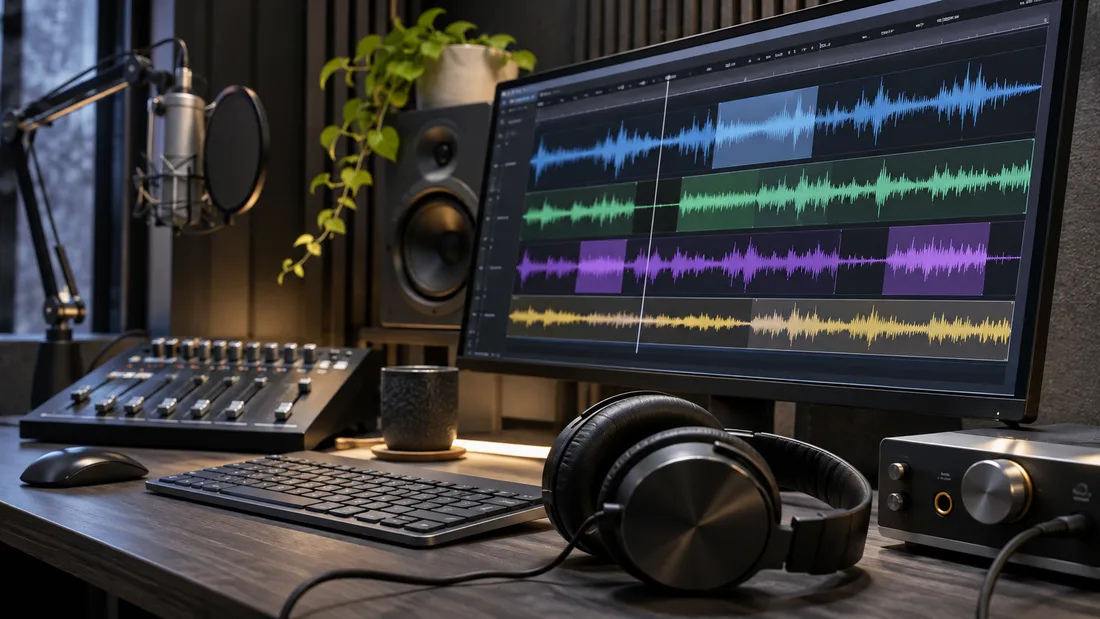
Copy or otherwise preserve the original recordings in a reliable form before extensive edits. Workstation playlists, take lanes, versions or equivalent facilities allow an editor to compare material without destroying the source. Give takes meaningful names and preserve sufficient handles around selected portions. A region that starts exactly at the word selected for use may lack the earlier breath or room sound needed to build a convincing transition. Retaining nearby material makes later revisions considerably easier.
Assemble a working composite from phrases with compatible articulation and vocal position. A singer can move sufficiently between takes for the sound of the microphone and room to change. Selecting every word from a different performance may reveal those changes even when each word is individually excellent. Favor longer passages that communicate a coherent interpretation of the line. A technically good note from another take is valuable when the existing note is genuinely distracting; it should not automatically replace a slightly different but expressive variation in an otherwise compelling phrase.
Place boundaries where the sound offers a good transition
Silence and quiet portions of a recording often provide convenient edit locations, but their usefulness depends on the acoustic surroundings. Room reflections and low-level microphone noise can change between takes. An abrupt splice during a nominally silent section may produce a discontinuity in the surrounding noise. On a vocal, the boundary between words can contain breath, mouth movement and the fading continuation of a previous vowel. Misplacing the edit by a small amount might remove an essential part of the phrase even when the words themselves remain present.
When a splice is required during a continuous sound, examine the two regions carefully. Similar waveform levels and compatible tonal content help establish a smooth transition. Working near a zero crossing can reduce a discontinuity in an individual channel, but this does not guarantee a natural edit. In stereo and multi-microphone recordings, all channels may have different instantaneous waveform conditions. A short, carefully selected overlap and crossfade can be much more effective than enforcing a single zero-crossing rule.
Choose crossfade duration and shape by listening
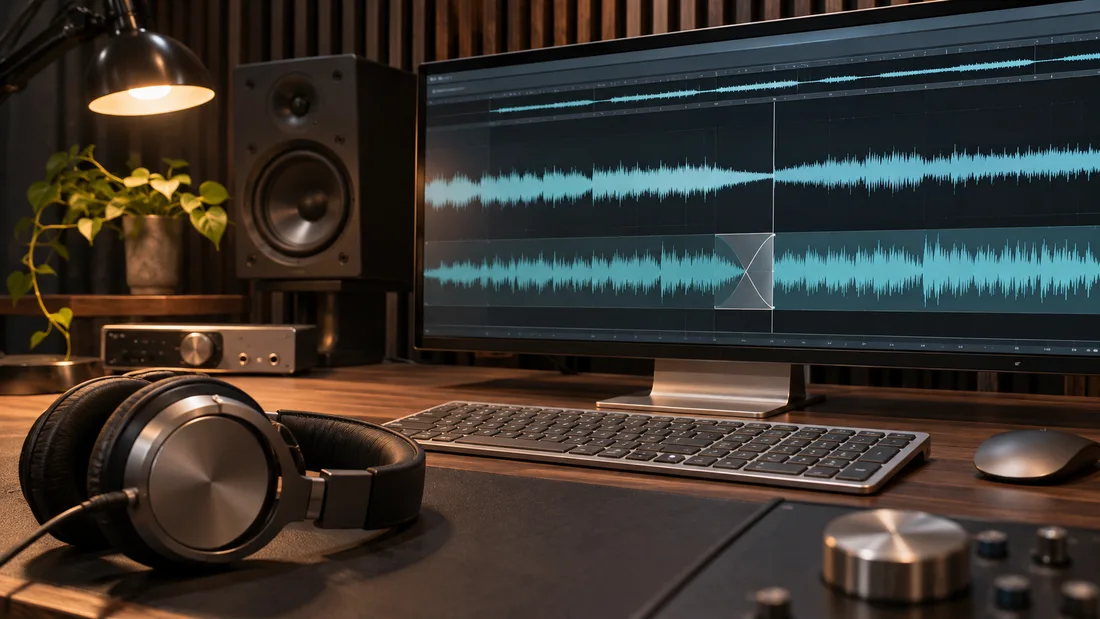
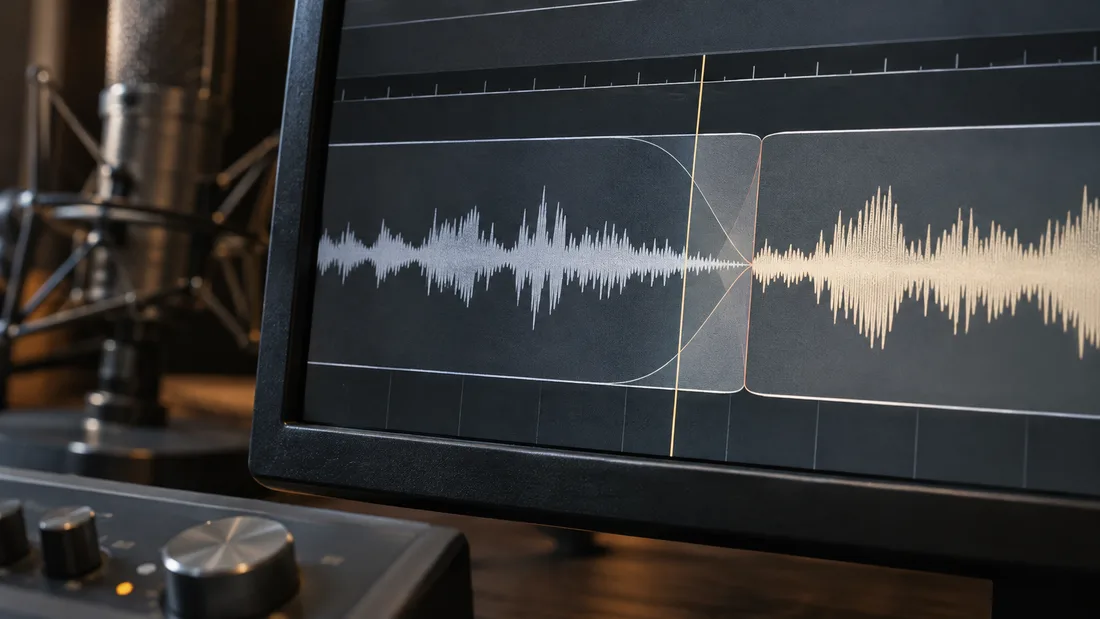
A crossfade changes the contribution of neighboring audio regions across their overlap. A very short fade can remove a click from a boundary without noticeably changing the duration of the surrounding event. Longer fades can create gradual transitions between sustained materials or ambience. Different fade curves produce different combined level behavior, particularly when overlapping recordings are closely related or largely independent. The visual appearance of a smooth curve does not by itself establish that the sound stays smooth.
Compare the edit at its normal playback tempo. Listen a few moments before and after the boundary rather than repeating only the microscopic region that contains the overlap. An extended crossfade may blur a percussion transient or create a short moment of doubled vocal articulation. A fade through two similar but differently timed pitched recordings can introduce interference and a temporary tonal change. Shorten or reposition the overlap when those problems become apparent. If the transition remains difficult, seek a better matching phrase instead of automatically lengthening the fade.
Maintain relationships in recordings of a shared performance
Editing a multi-microphone recording introduces consequences beyond the track visible on screen. A drum hit may arrive differently at every microphone because of physical spacing. If one of those recordings is shifted independently, it may no longer match the bleed heard in the others. The combined sound can change in both timing and tone. Similar issues occur with ensembles recorded in a shared room, where one instrument's attack is also audible on several tracks.
Group the relevant recordings before performing structural edits or timing changes that should apply to the complete event. On a drum kit, a correction that moves an important performance moment may need to carry close microphones, overheads and room microphones together. Use independent edits only when the reason is clear, such as removing an isolated mechanical noise that does not appear in other recordings. Inspect crossfades in the group as a whole. The combined version is the actual edited performance, even though the editor may need to examine individual microphones to understand a particular issue.
Preserve breath and room tone
A vocal recording includes more than its pitched notes. Breathing conveys phrasing and effort, and the quiet sounds at the beginning and end of words often establish their intelligibility. Removing every breath creates a peculiar continuity in some performances. Other recordings contain louder breaths than the intended perspective suggests, perhaps because of close microphone placement. A gentle gain adjustment to the offending breath may solve the problem while retaining its shape and relationship to the surrounding phrase.
Background sound requires similar judgment. Completely removing the noise between lines can make the microphone seem to appear and disappear. In a room with recognizable ambience, a quiet section of compatible room tone may create a more natural repair than digital silence. Capture or retain enough room tone to avoid creating a repeatedly identifiable loop. Changes in traffic, ventilation or position can make one quiet section inappropriate for another. Listen to the whole phrase after adding a replacement so that its noise progression remains convincing.
Timing adjustments should preserve musical relationships
A grid can identify deviations from the intended tempo, yet it does not establish whether those deviations are mistakes. Bass and percussion may have a deliberately loose relationship. A melody may lean ahead of a beat for expressive reasons. Some instruments create preparatory sounds before the onset marked by their most prominent waveform peaks. Before shifting a recording, listen to the accompanying parts and find out whether the apparent irregularity actually impairs the music.
Moving an isolated event changes the spaces around it. Extending one neighboring region and shortening the other may reveal an edit or change the natural decay. Time-stretching tools sometimes preserve a continuous recording while altering its duration, but the process can introduce audible artifacts depending on the algorithm and source. Make localized adjustments when they offer a useful improvement. Avoid repeatedly stretching already processed versions if returning to the original material would allow a cleaner operation. Always check the change against the neighboring performances, not only against the grid.
Listen to the complete edited track before mixing
An editing session can become so focused on corrections that the original interpretation of a performance is difficult to remember. Take a break after major decisions and then play the complete recording at a normal listening level. Note repeating noise patterns, unnatural ends of words, unexplained changes in acoustic perspective and musical timing that no longer feels connected. Fix genuinely audible issues, but leave unobtrusive local variations alone. Compare with a complete original take if the composite feels less convincing than expected.
Finally, preserve the approved composite and document any important choices that a later mixer may need to know. Keep alternate takes accessible and distinguish the edited recording from rendered experimental processing. A clear edited session can proceed into mixing without requiring the next person to reconstruct the previous decisions. The most successful edits tend to disappear from the listener's attention. What remains is an intelligible and believable performance, which was the reason for undertaking the editing in the first place.