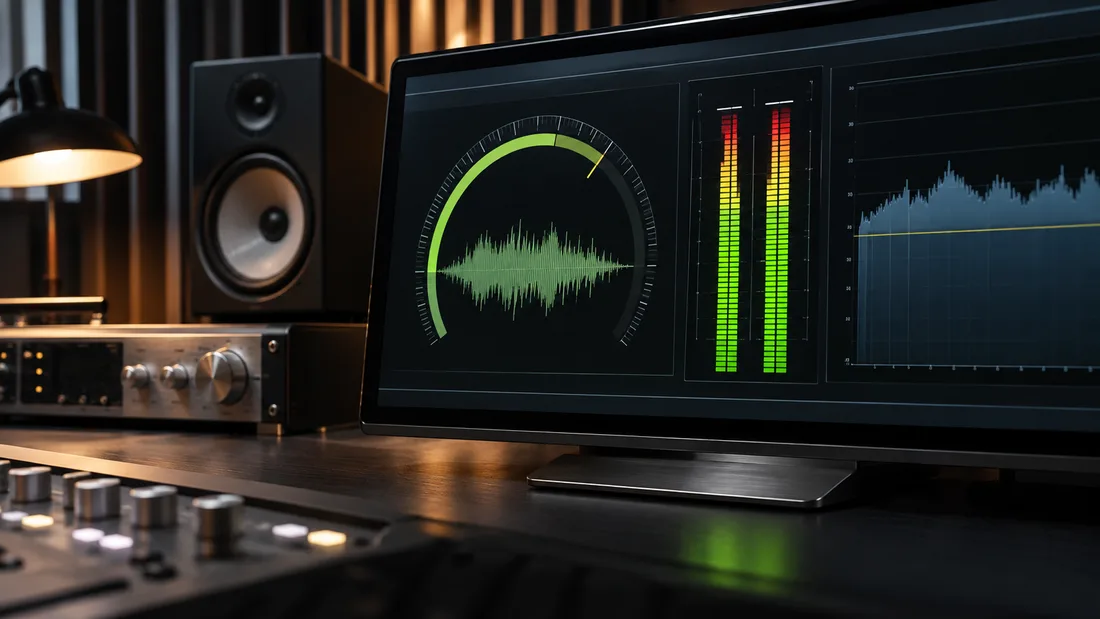
Sound Production
Loudness, Peak Levels and Translation: What Audio Meters Can Actually Tell You
Learn the distinctions between sample peaks, true peaks, RMS and integrated loudness, and apply them to reliable audio preparation.
 Silver CircleAUDIOIndependent audio journal
Mixing, mastering, dynamics, spatial processing and sound design. The craft behind the finished recording.
10 articles. Newest archive editions first.
Learn the distinctions between sample peaks, true peaks, RMS and integrated loudness, and apply them to reliable audio preparation.
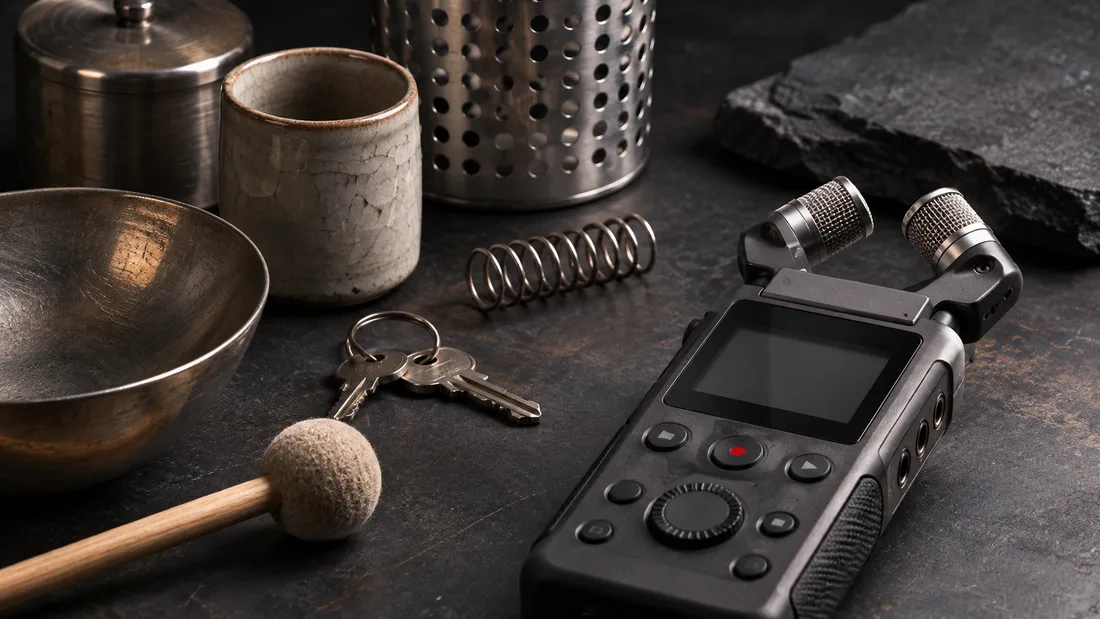
Capture useful source material, organize sonic experiments and reshape recordings through layering, pitch, filtering and spatial processing.
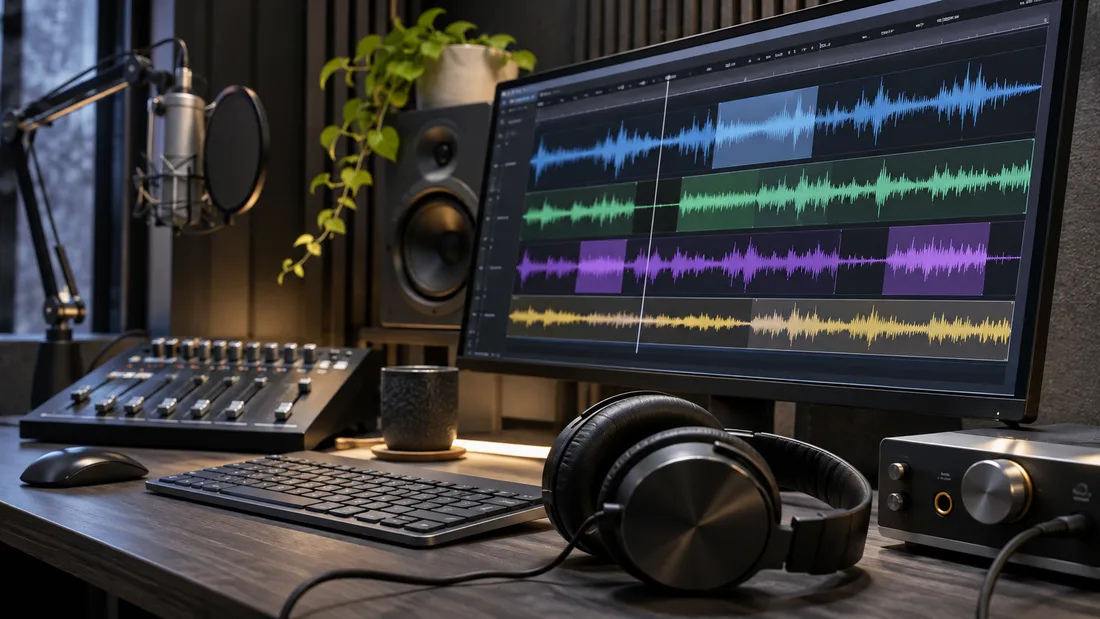
Repair audible distractions, select takes and make precise edits while retaining articulation, timing and believable room tone.
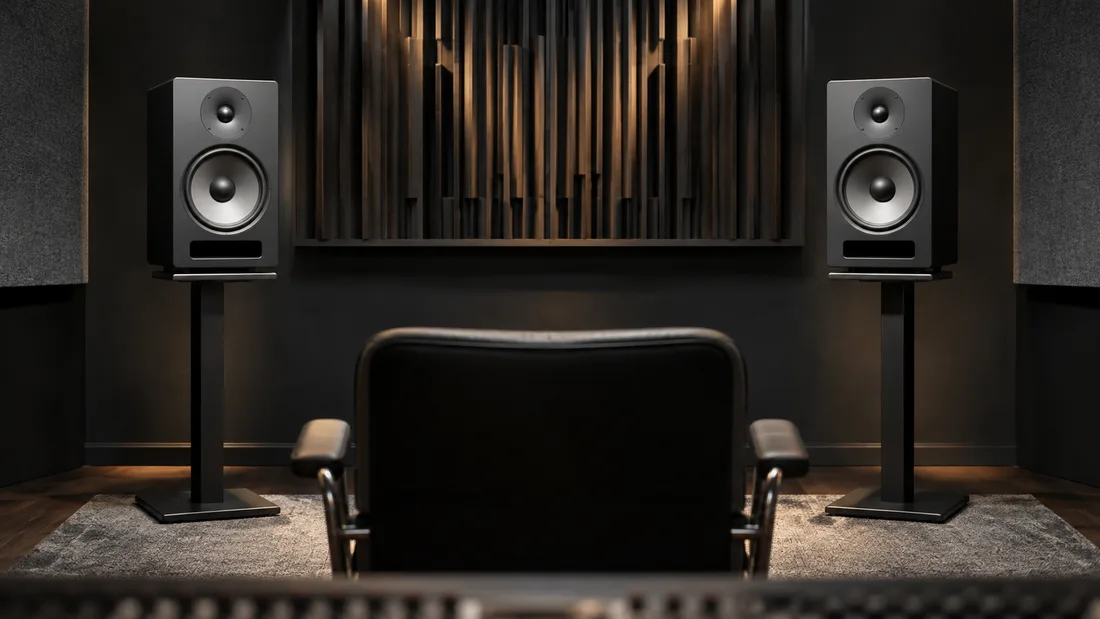
Make informed decisions about panning, stereo microphone relationships, mid-side processing and width while keeping the mix coherent across systems.
Plan a mastering session around reliable listening, modest tonal changes, delivery specifications, sequencing and quality control.
Develop a clear mixing direction, establish useful balances, and solve arrangement conflicts before concentrating on individual track processing.
Build musical delay effects with deliberate timing, carefully managed feedback, filtering and automation in vocal and instrumental arrangements.
Explore early reflections, tails, pre-delay and frequency-dependent decay to create depth without sacrificing intelligibility.
Understand how compressor settings alter the shape of vocals, bass, drums and buses without confusing increased loudness with better dynamics.
A listening-led approach to corrective and creative equalization, with practical ways to identify masking, resonance and tonal imbalance in a mix.