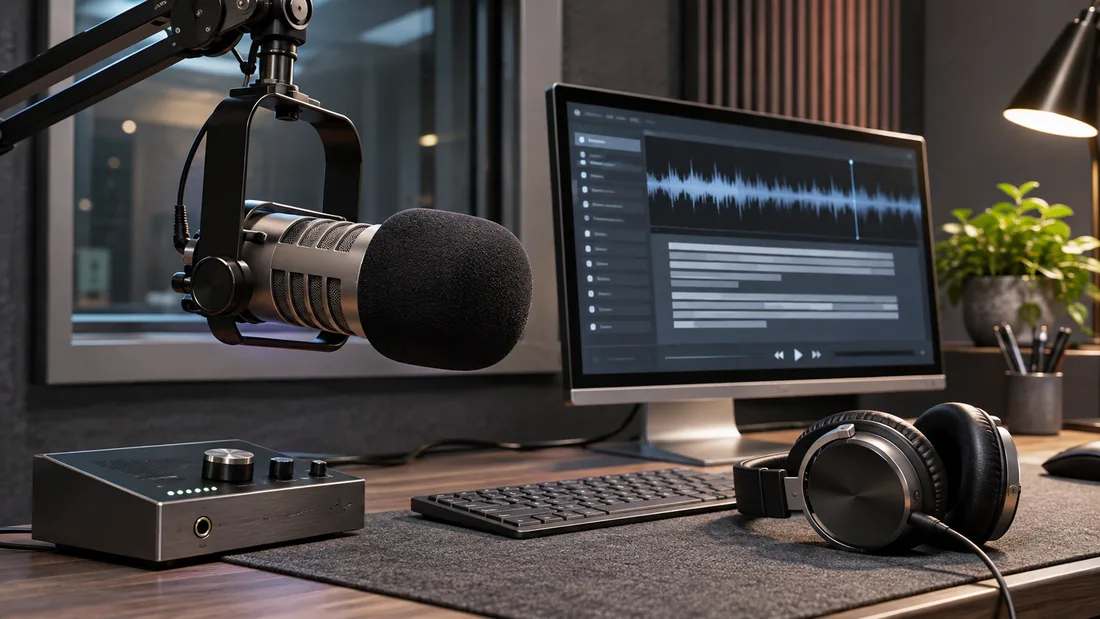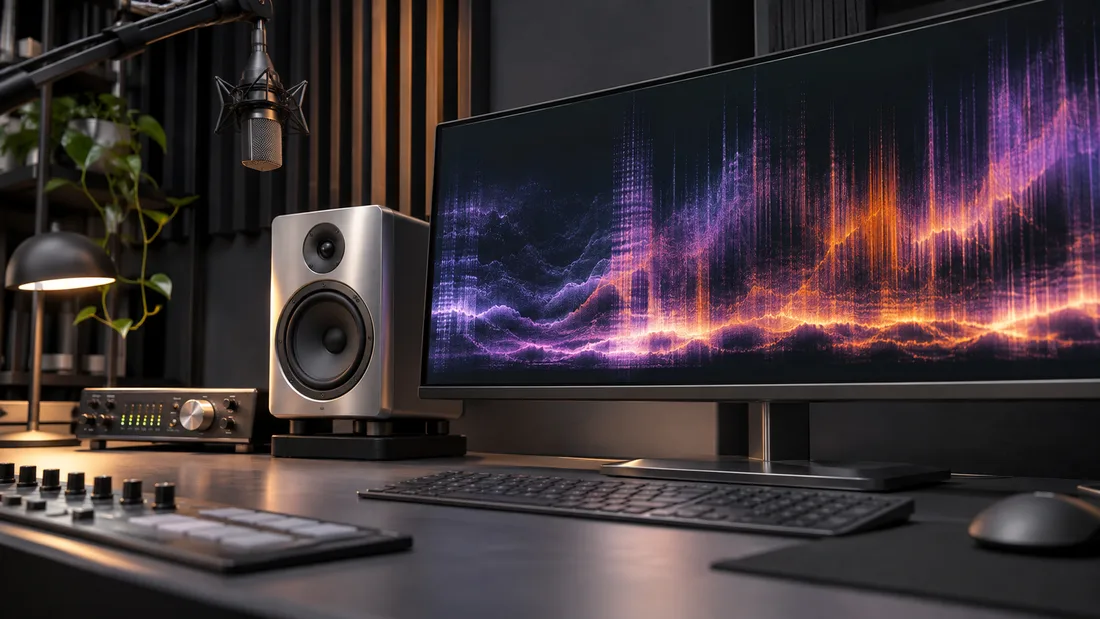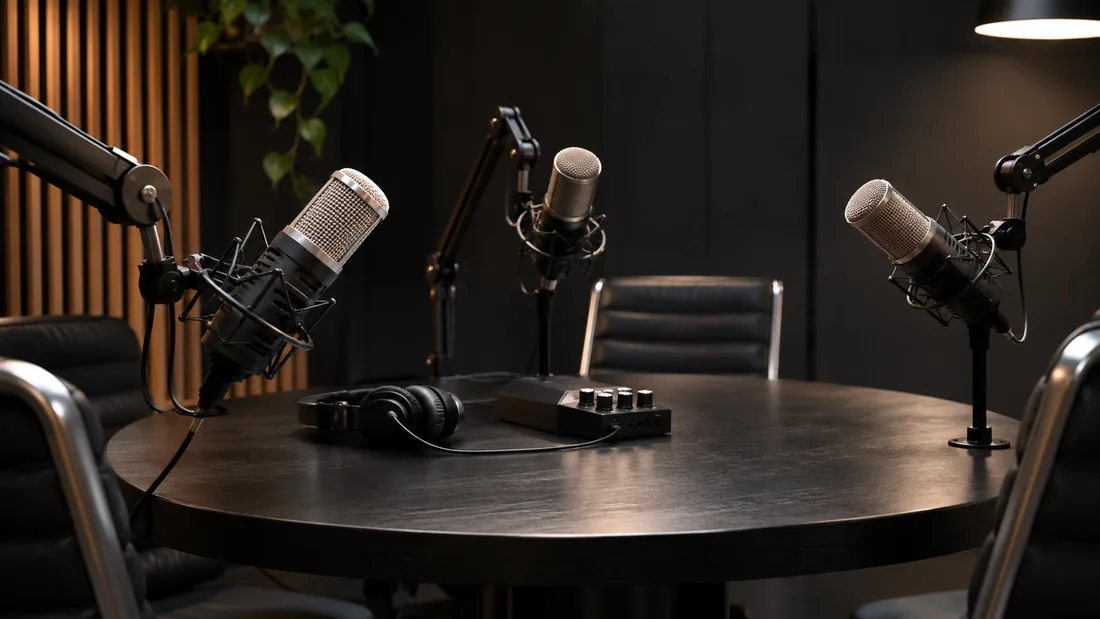
An accurate transcript of a roundtable discussion may still be frustrating to use if it contains one uninterrupted block of words. Editors must determine which guest made each observation, locate the corresponding moment in the recording and understand how the other participants reacted. The solution offered by speaker diarization is to estimate the boundaries and group together sections of speech associated with the same speaker.
Diarization is not the same task as transcription. It can be applied to a recording without obtaining its written content at all. It also differs from identifying a known person. A system that labels sections as speaker A and speaker B might accurately separate two voices without knowing either person's name. For audio production, maintaining these distinctions helps prevent a confident-looking output from accidentally assigning statements to the wrong individual.
What the algorithm is listening for
Speech contains a mixture of linguistic and acoustic characteristics. Different speakers tend to have different vocal ranges, spectral shapes and patterns of articulation. A particular speaker may sound markedly different when whispering or laughing compared with ordinary conversation. Recording conditions affect these features too. The same person speaking from two different rooms can produce signals that differ more in some measurable respects than two people recorded with identical equipment.
A typical diarization approach begins with detecting active speech regions. It then represents segments of speech using compact learned or engineered features. These segments can be grouped according to similarity, after which an algorithm estimates the sequence of speakers over the recording. Other approaches use neural architectures to assign speakers more directly across time. Exact implementations vary, particularly in the way they handle overlap and estimate the number of participants.
Consider a conference recording containing three speakers standing at a podium, with applause and music between the prepared talks. Clearly separated speaking turns make the task relatively simple, although the applause is not an additional person. A spontaneous kitchen-table conversation presents different challenges: the participants interrupt, echo each other's words and react with very short comments. A diarizer may detect the long turns well while missing the brief contributions entirely.
The selection of input audio affects these errors. Compression, room noise, microphone movement and bandwidth reduction can change the information used to group speakers. Audio captured directly from a remote call may sound quite unlike a locally recorded microphone even when both belong to the same person. If the editor combines several sources into one timeline, a system may split a voice when the recording path changes.
Use channel information when it is available
Independent microphone feeds are particularly valuable in interview and panel sessions. A mono recording of a table discussion introduces all of the speakers to the same channel. A multitrack recorder can instead preserve a separate feed for each person. If the microphone assignment is documented, the individual tracks already provide a meaningful speaker index.
There will usually be bleed between microphones in a shared room. A guest's voice could appear on all of the feeds at different levels. Do not infer that any region containing a waveform must correspond to the person assigned to that channel. Compare relative levels, timing and directness. When one person's microphone contains the clearest signal for a statement and a neighboring channel contains weaker delayed spill, the stronger direct feed is a sensible starting point.
Before trusting an isolated-feed recording, check file names and track assignments against the opening slate or introductions. It is easy to reverse two labels when the cables are moved or a session is imported using a different track order. Once verified, keep the names consistent in the editing project and in exported transcripts. A simple correspondence table for track names, spoken names and generic speaker labels is enough for many smaller productions.
In remote interviews, independent local recordings can sound much better than the mixed audio from the call. They may also start at different times. Establish synchronization using the shared call audio or a recognizable transient at the beginning. Drift across a long session is possible when participants record using independent clocks. Check alignment near the end as well as the beginning before mapping transcript times to these source files.
Review overlaps and interruptions
Some diarization systems assume that only one person is speaking at a given instant. This is an understandable simplification for broadcast narration but unsuitable for a lively discussion. If one speaker begins a response before another finishes, the resulting labels might alternate quickly or attach both contributions to a single speaker. The transcript can appear grammatically reasonable while losing a significant interruption or agreement.
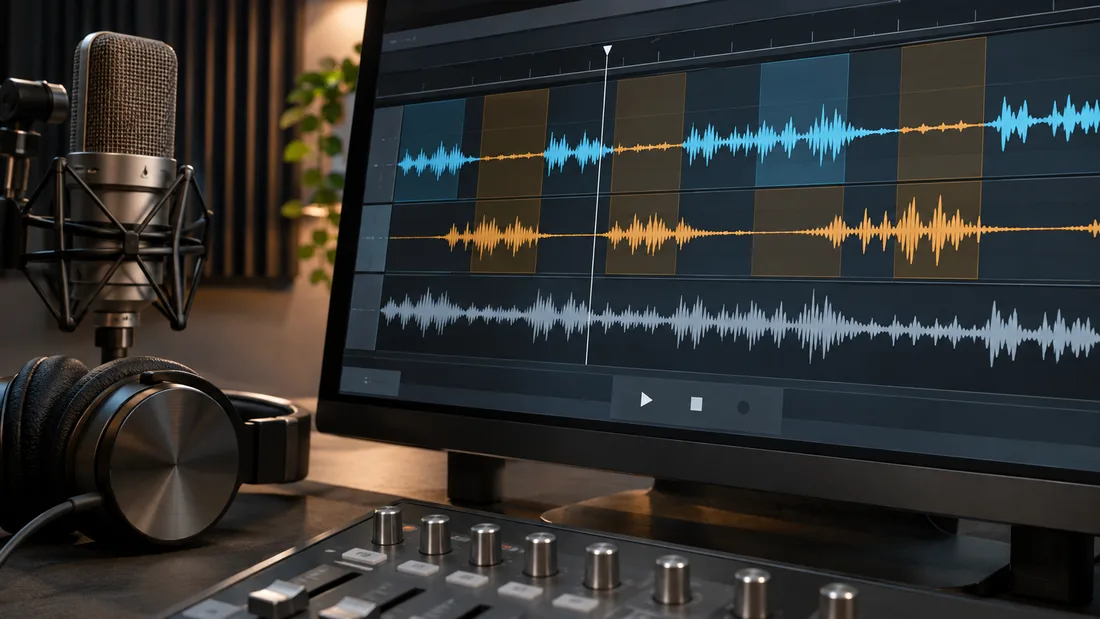
An editor should deliberately search for sections with simultaneous speech. Listen with the waveform visible and compare isolated channels, if available. Short interjections such as yes, no and right may carry important conversational meaning, especially in journalistic and research material. A sentence completed by someone other than the original speaker should not be silently attributed to the first person.
Avoid solving these problems exclusively by cutting all overlapping sound from the edited program. A thoughtful interview may depend on reactions and changes in pace. When clarity requires an edit, preserve the intended meaning and retain sufficient room tone to make transitions natural. Keep the reviewed transcript aligned with the published edit as well as the uncut archive if both versions are intended for later use.
Assessing quality is more than counting speakers
One commonly used measurement is diarization error rate. It summarizes kinds of mistakes such as missed speech, speech detected where there is none, and confusion between speakers. Evaluation conventions affect the score, including treatment of overlapping speech and tolerance around imperfectly placed boundaries. For a producer, a published benchmark number is less informative than performance on the kind of audio the production actually records.
Create a short test set containing a representative selection of difficult material. Include clear introductions, fast turn-taking, laughter, cross talk, silence and changes in microphone position. Manually mark approximate correct speaker regions. Process these examples using the proposed tool and check whether the output groups each participant consistently across the recording.
Look for two different errors that may have similar numerical effects. The first is merging two participants under one label; the second is giving the same participant two labels. A merged label may be especially problematic if the transcript is used to publish attributed quotations. A split label can be easier to repair if the editor recognizes that both groups belong to the same person. The time required for correction depends on how the output exposes the errors.
If the tool allows the number of speakers to be specified, try giving it the known participant count. This can help when the recording contains noisy sections or several brief contributions. However, do not force a count that excludes a brief additional speaker simply because they were not introduced. A recording may contain a technician's off-microphone question or another unplanned voice.
Bringing the result into production
Export speaker regions in a format that preserves timestamps and label names. Use a structured representation when the subsequent editing system can import one. A plain text transcript remains useful for review, but the relationship between words and time becomes harder to maintain if the text is edited independently of the audio. Preserve an unchanged export before substantial corrections.
Start by identifying the recurring speaker labels, then review the regions that matter for the episode. Corrected speaker names should be consistent across interviews featuring the same participants, but do not use similarity alone to identify a person in a different file. A label in one session has no guaranteed relationship to a label with the same number in another. Resolve identities from the recording or reliable session information.
If material is intended to become an accessible transcript, identify speakers in a readable way and describe non-speech events only when they contribute to the listener's understanding. A generic label may be preferable where the participant is unidentified. In sensitive documentary situations, use the agreed naming conventions and protect private recordings during processing and review.
The most useful diarization output is an editable map of the conversation. It can save a great deal of time searching long files, especially in projects with many interviews. The map becomes reliable when it is connected to the original recording, verified against clear examples and corrected where the natural complexity of conversation defeats automatic grouping.