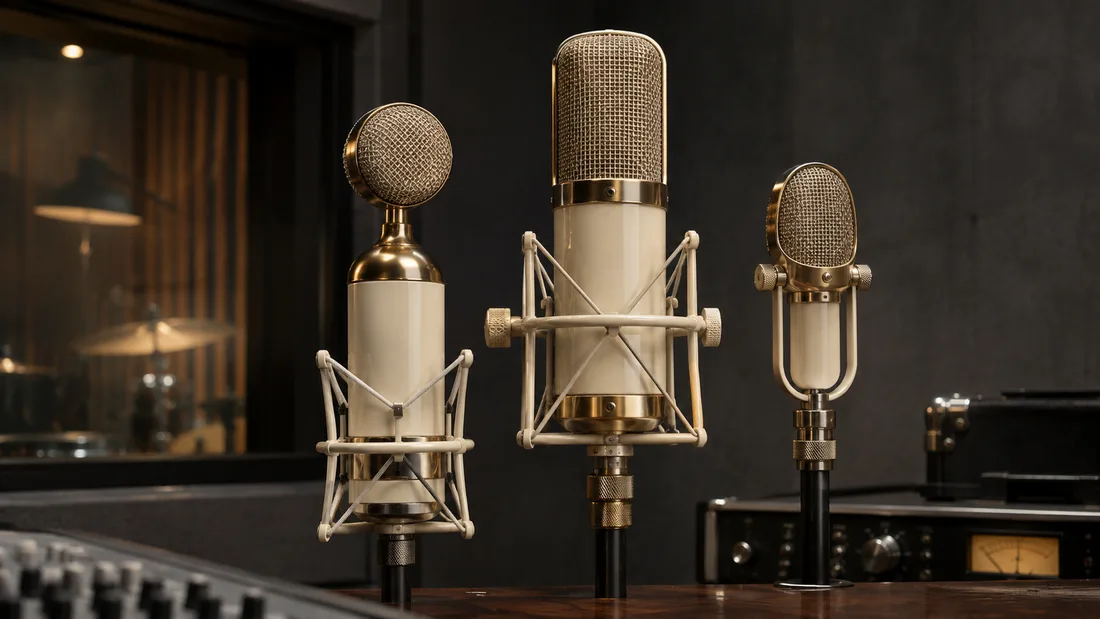
A company does not necessarily need to be founded in the middle of a celebrated recording scene to become part of it. Soyuz Microphones is a particularly interesting case. Its manufacturing base is in Tula, Russia, a city more readily identified with metalworking and industrial history than with international record production. Yet microphones designed and assembled there have appeared in the discussions of engineers working in American and European studios. Understanding what attracted their attention means looking beyond the familiar cream and brass finishes and examining how the company approaches the much less visible parts of microphone construction.
Why the story begins in Tula
Soyuz was established in 2013 by American musician David Arthur Brown and Russian businessman Pavel Bazdyrev. The Russian name means union or alliance. The partnership brought together a musician's perspective on how recording equipment should behave and the practical knowledge necessary to operate a manufacturing business in Russia. There is also a more specific local connection. Tula has been home to the Oktava microphone factory since 1927. Soyuz recruited people with experience in that industrial tradition, including machinists and engineers. This gave a young company access to expertise in precision manufacturing that would have taken considerable time to develop elsewhere.
Many modern microphone companies can specify a design, order components from suppliers in several countries and assemble or package the resulting product under a brand name. There is nothing inherently wrong with that arrangement, and it can produce very good microphones. Soyuz instead established substantial manufacturing capabilities within its own facility. Machining a body, building a capsule and assembling a completed microphone involve different skills. Keeping those operations close together allows the designer to consult the people actually producing the parts, an important consideration when an apparently minor change in material thickness or geometry affects both mechanical stability and sound.
The capsule as a deliberate choice
A condenser microphone contains a thin, electrically charged diaphragm that moves in response to changes in air pressure. The diaphragm and an adjacent backplate form a variable capacitor. The electrical signal that emerges from this arrangement is extremely small and requires a very high impedance input stage. The final response also depends on the spacing, tension and acoustical damping around the diaphragm, as well as the electronics following it. Consequently, a visually accurate copy of a historic microphone need not behave like its predecessor.
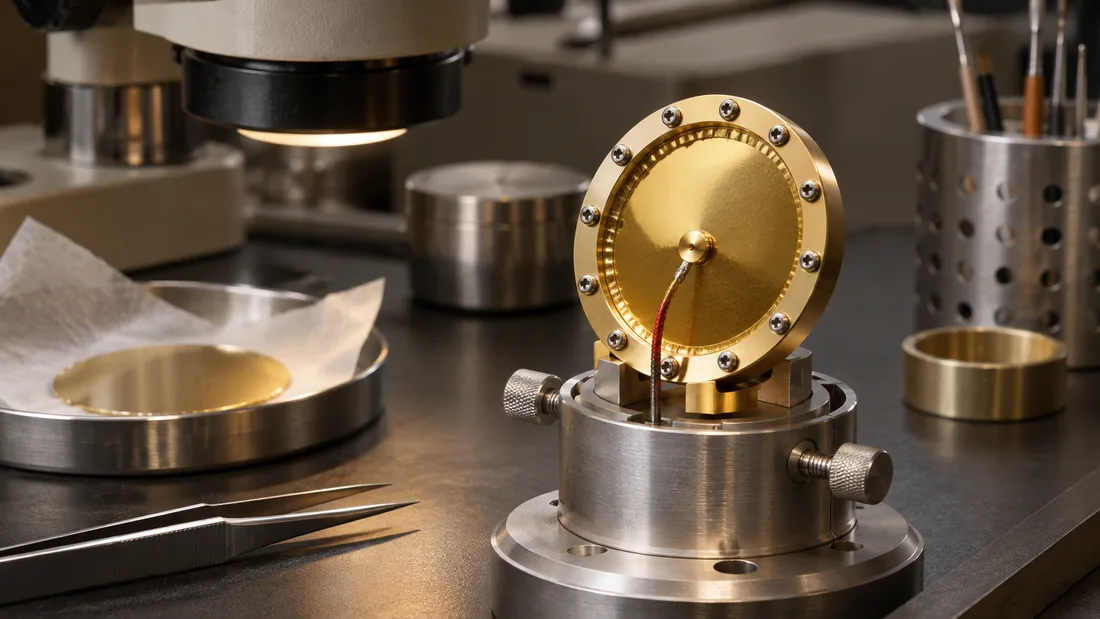
Soyuz produces its own large and small capsules, drawing inspiration from several generations of European and Russian condenser designs while modifying them for its own models. This is fundamental to the identity of the brand. Instead of treating the capsule as an off-the-shelf component around which the rest of the microphone is built, the company regards it as part of the design process. It openly acknowledges historical influences but does not claim that a newly manufactured microphone is identical to a seventy-year-old unit from another manufacturer. That distinction matters to a buyer trying to choose a tool for regular use rather than acquire a museum piece.
017: a flagship in two forms
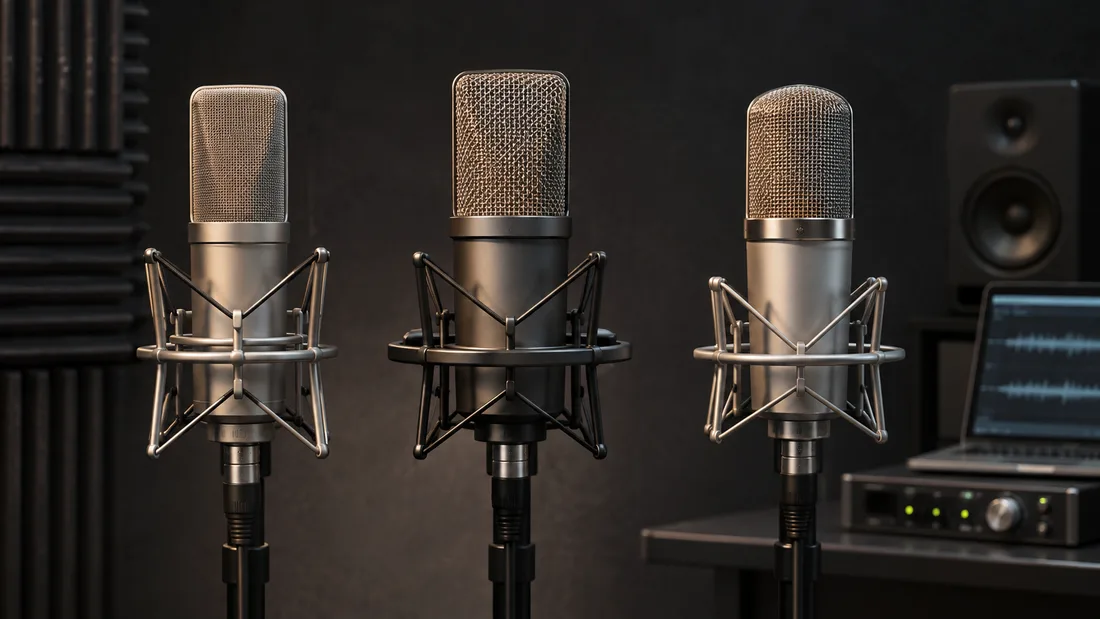
The 017 family is perhaps the clearest introduction to the Soyuz approach. It comprises a large-diaphragm tube condenser and a field-effect transistor version. Both employ a custom capsule, and Soyuz specifies a proprietary toroidal transformer in the family. The tube model uses an external power supply; the FET model operates under the more familiar conditions of a phantom-powered studio condenser. A transformer, an active circuit and a capsule should be considered together, since it would be misleading to attribute every audible distinction between these two microphones solely to the presence or absence of a vacuum tube.
With the 017 models, an engineer might consider a lead singer, a string instrument or an acoustic guitar in a suitably controlled room. Their broadly full-range application is precisely why a large-diaphragm microphone deserves careful attention to distance and angle. A close cardioid presentation can bring low-frequency proximity effect into a voice. Moving the singer farther away may produce a more balanced result while increasing the contribution of room reflections. A microphone purchased for its musical midrange does not solve either problem automatically. It provides a particular starting point, after which the technique establishes the actual balance.
The 017's reputation also reflects the appeal of a newly made premium condenser to studios that might otherwise search for vintage equipment. A classic older microphone can be delightful, but condition varies between examples. Repair, compatible power supplies and unavailable replacement parts complicate ownership. The meaningful comparison is therefore not just a comparison of frequency charts: it includes repeatability, service and whether the microphone can be confidently taken into a session expected to run all day.
The 023 Bomblet and its older ancestry
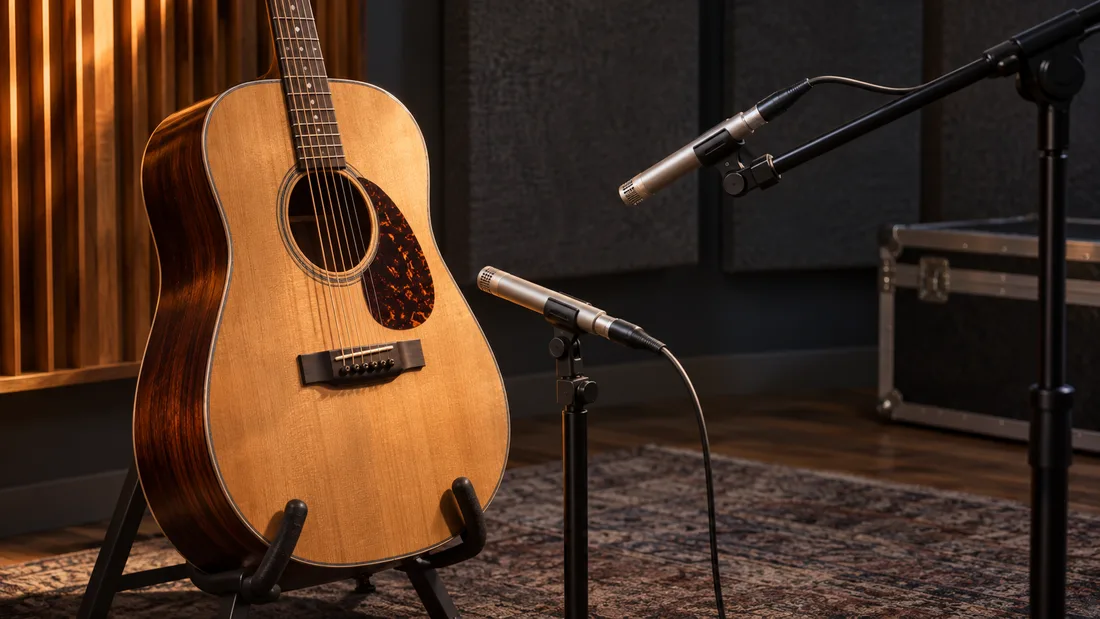
The compact, visually distinctive 023 Bomblet is a FET condenser with a fixed cardioid pattern, designed for recording sources ranging from vocals to drums and amplified instruments. Its capsule history is unusually specific. Soyuz traces the principle back to the Austrian AKG CK12 capsule in the 1950s. Designers at LOMO subsequently revised the arrangement in the early 1970s, adding a third backplate in pursuit of consistency. Soyuz then reworked the idea into its S23 capsule. Such an ancestry illustrates how microphone engineering can pass between different production environments while gradually acquiring new practical characteristics.
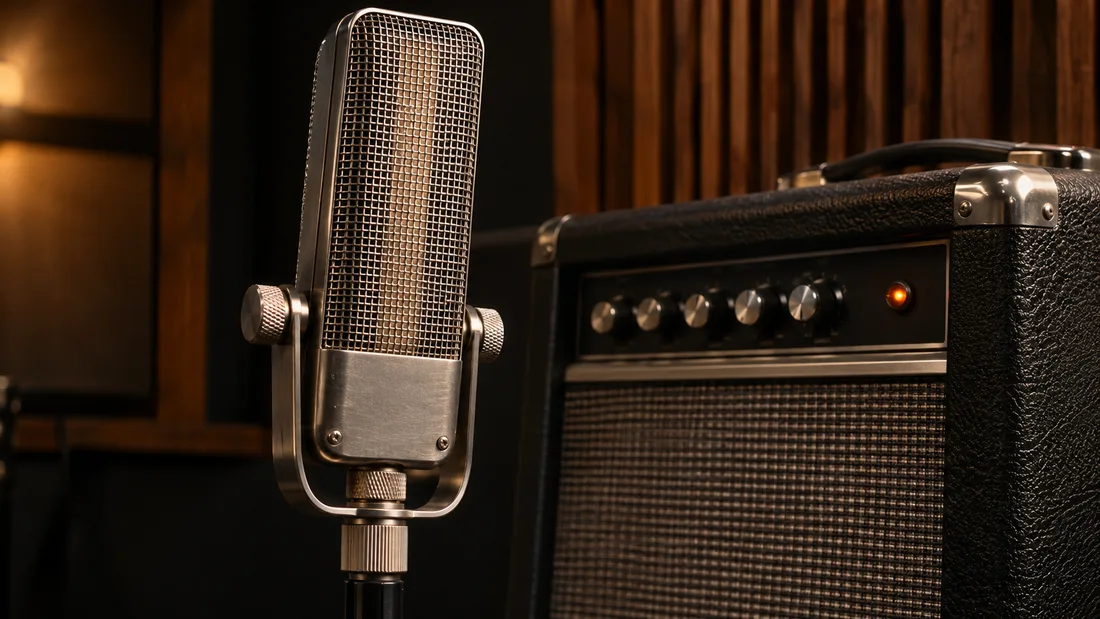
Compared with trying to make one microphone everything to everybody, a condenser with a deliberately distinct frequency balance provides an alternate option in an engineer's collection. The Bomblet is described by its manufacturer in terms of a substantial low end, noticeable middle frequencies and restrained high-frequency character. Those are tonal descriptions rather than guarantees. Consider a guitar cabinet whose on-axis sound contains abundant upper-midrange energy. An engineer seeking a less sharp presentation might regard the 023 as an appropriate candidate, then experiment with physical position before using an equalizer. In front of percussion, the supplied attenuation option can provide additional margin when sound levels are high. Level matching becomes important if comparing it with another microphone.
1973: revisiting the same capsule family
In 2022 Soyuz introduced the 1973, a smaller large-diaphragm condenser with the aim of making the company's handmade microphones accessible to a wider group of engineers. Its capsule comes from the same S23 design heritage used in the Bomblet. The microphone is not, however, merely a 023 fitted into a different housing. It employs a transformerless FET circuit and incorporates a resonator intended to tame unwanted acoustic resonances inside the body. Switching between its two attenuation settings, minus 10 and minus 20 decibels, accommodates powerful sources. It has a fixed cardioid pickup pattern and uses standard 48-volt phantom power.
The small housing is a significant practical feature. A large classic condenser can require a sizeable suspension and stand, creating difficulties around a closely spaced drum kit or a musician who needs a clear view of a score. Shorter microphones can often be positioned in useful spaces that would be awkward for much larger designs. The 1973 can function as an all-purpose studio condenser on these grounds, although its fixed pattern means it does not offer the flexibility of a multi-pattern microphone when recording a room in stereo or capturing performers on opposite sides.
International recognition without assuming a house sound
Soyuz earned interest outside Russia through artist and engineer relationships, dealers, recorded examples and reviews in professional recording publications. Tape Op's published discussion of the Bomblet, for example, relates the microphone to actual engineering decisions and other models in a working studio. The existence of such independent coverage is more illuminating than the company's own marketing language. It shows that the microphones became part of conversations in which working engineers compare alternatives and think about the expense of adding equipment to a collection.
It would nevertheless be unwise to treat one engineer's successful session as proof that the microphone is ideally suited to every singer or every room. Each Soyuz model has a place in the wider field of studio microphones. The 017 offers the choice of two circuit approaches; the 023 pursues another sonic balance; the 1973 provides a compact implementation with simpler electronics. Their emergence is remarkable because these products demonstrate that expertise in Russian precision manufacturing can support an international recording identity without abandoning the history that formed it.