In music production, a successful edit may be concealed by the beat, another instrument or the reverberation around a note. Spoken-word recording places the edit itself in relatively plain view. A split made a fraction too early can alter a consonant. An abruptly disappearing breath can change the energy of a sentence. Removing a pause may accidentally turn a thoughtful response into an impatient one. Listening for these relationships is a substantial part of editing interviews and narration well.
The editor's task begins with decisions about meaning and structure rather than an attempt to remove every imperfection. A recorded discussion may include repeated explanations, misunderstandings, interruptions and changes in direction. In a finished episode, the important details should remain clear, the voices should still resemble the speakers, and the cuts should not interfere with the listener's ability to follow the material.
Establish an editorial pass before polishing the sound
Keep a copy of the original recordings and work in a session that permits edits to be altered later. Preserve the individual microphone tracks. Listen through the conversation, noting the principal sections and any factual corrections. The first pass might consist of trimming material that is unrelated to the episode, moving clearly separate segments into a more coherent order, and marking places that need clarification or review. It is easy to spend twenty minutes repairing a noise only to remove that entire section in the subsequent structural edit.
Written transcripts can help locate subjects in a long session, whether made manually or with speech recognition. They can also hide important elements of the performance. A transcript might contain two identical statements while one is delivered with confidence and the other is clearly a question. Use the recording, not just the written words, to decide which material belongs together. In particular, check names, numbers and other details that a speech recognizer might have misunderstood.
When reorganizing an interview, ensure that the resulting exchange remains faithful to what each participant meant. Moving an answer may suggest it was a response to a different question. Joining fragments of separate statements can imply a claim the guest never made. The edit deserves an additional context check whenever the original order is changed substantially. If necessary, add a short piece of narration explaining the transition.
How to cut pauses and repeated words
A useful pause may separate a conclusion from a new thought, give a listener time to absorb an unfamiliar name, or allow a guest to consider what to say next. A long silence caused by locating a reference document usually serves a different purpose. Treat them differently. Shorten pauses according to their role rather than imposing one target duration on the whole programme. A hesitant answer can still be meaningful, especially if the hesitation reveals something about the subject.
Repeated syllables and abandoned starts are common features of natural speech. Remove the ones that distract from comprehension or destroy the pace of a prepared narration. Many occasional fillers can remain without becoming noticeable. It is possible to make a speaker sound unusually artificial by deleting nearly every 'um' and 'you know'. The goal is not to give every person the same clean, fast pattern of speech. One speaker may habitually use short sentences, another may build longer ones with deliberate intervals.
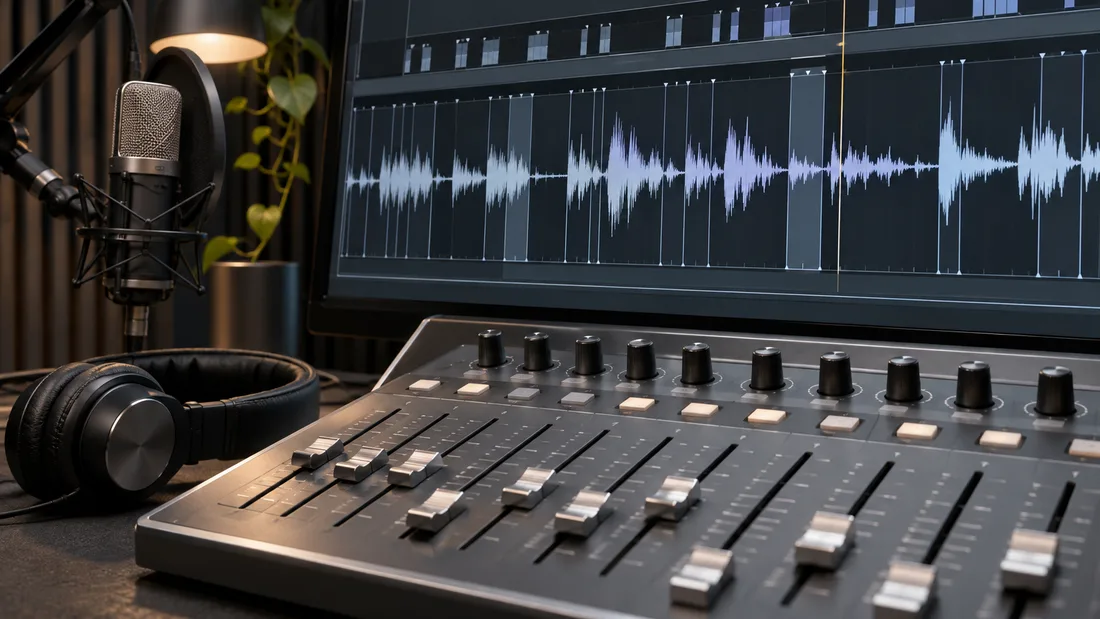
Listen around a candidate edit before deciding where to split. Look for a quiet boundary between sounds, taking account of both the end of the preceding word and the beginning of the following one. Visual waveforms are useful for finding likely boundaries, but some quiet consonants are critical to the identity of a word. A short fade at the edit can prevent a digital click or an abrupt amplitude change. If the word begins to sound different, extend the clip again and adjust the cut.
Room tone and the illusion of continuous recording
Even a very quiet recording contains some background sound. If a trimmed pause is replaced with complete digital silence, the difference may be apparent, especially in headphones. A listener hears the room switch off and back on. This sensation becomes more prominent with repeated cuts. A short piece of genuine room tone from the same microphone position can preserve an impression of continuity beneath a small gap.
Keep useful room tone accessible in the session. Find a range of quiet recording that does not contain a prominent movement or other striking event. If different microphones or recording times have noticeably different environments, retain suitable tone for each channel. A single short fragment repeated many times may create audible rhythmic patterns if it contains recognizable detail. Choose and vary the pieces by ear.
Fade ambient sound in and out carefully when filling a gap. At a transition between two differently recorded sections, abrupt switching between background signatures may draw attention to the cut even if both individual tracks are clear. Matching the underlying tone or acknowledging the transition editorially may work better than applying heavy noise reduction to everything. The best solution depends on whether the difference obscures the words or merely reveals that the setting has changed.
Dealing with breaths, mouth sounds and plosives
Breathing belongs to speech. A prominent intake can be distracting, particularly when a microphone is very close, but blanket deletion tends to produce sentences that appear to be spoken without interruption. Lower the loudest breaths with clip gain where they are distinct from surrounding words. Preserve enough breath to maintain a credible sense of phrasing. Pay particular attention after editing a pause, since a breath may otherwise arrive too quickly at the beginning of the next sentence.
A lip click in an isolated gap may be removed cleanly with editing. If it occurs in the middle of a word, a spectral repair tool might reduce it without affecting as much of the wanted sound. Evaluate the result in context; a faint click can be less objectionable than a distorted vowel. Similarly, a plosive may respond to localized low-frequency filtering or level reduction. Processing the entire interview to fix one consonant may unnecessarily alter the sound of thousands of clean syllables.
Working with microphone spill and overlapping speakers
Separate microphone tracks offer considerable editing control, but the conversation may still appear on more than one track. If a producer mutes one microphone while a guest is speaking, the change in the room sound or the loss of recorded reactions can be apparent. Listen for what happens to the combined mix when one track is attenuated. A carefully shaped envelope often works better than a hard mute. Transitions can be surprisingly audible during sustained ambience.
When people speak over one another, consider whether all the voices carry important information. A quick agreement may simply support a sentence, while an interruption may begin a new topic. If the words conflict, independent tracks make it possible to adjust one participant relative to the other. The editor also has opportunities to introduce a little space between phrases where they were actually recorded without substantial spill. Avoid creating a suspiciously ordered exchange from a lively conversation.
The last listen is a different kind of work
After refinement and processing, play the finished sequence without watching the screen. Note each place where a transition, sound or shift in pace calls attention to itself. A waveform can make a tiny click appear significant, but a normal listener does not see it. Conversely, an unnatural break in a phrase may sound very obvious while its waveform looks perfectly clean. Listening in this way helps prioritize final fixes.
Check the opening and closing segments, credits, any inserted examples, and areas where you moved answers. Confirm that the names and factual details agree with the episode notes. The most ambitious repair may be unnecessary when it has no effect on the listener's understanding. A successful spoken-word edit preserves the recognizable personality and intentions of the person behind the microphone while giving their words a clear route to the audience.