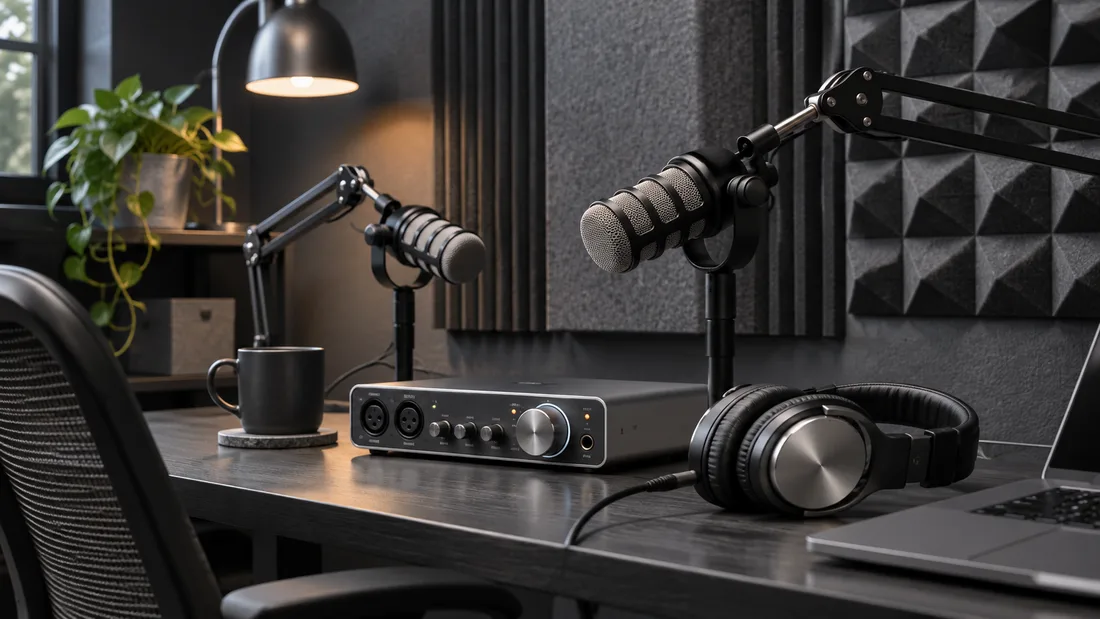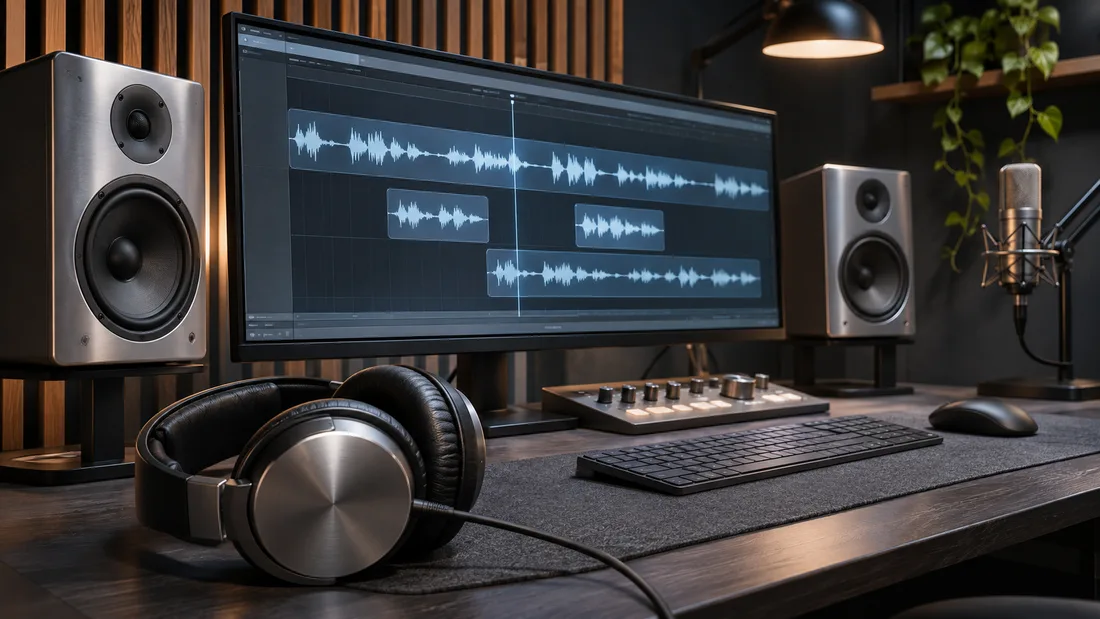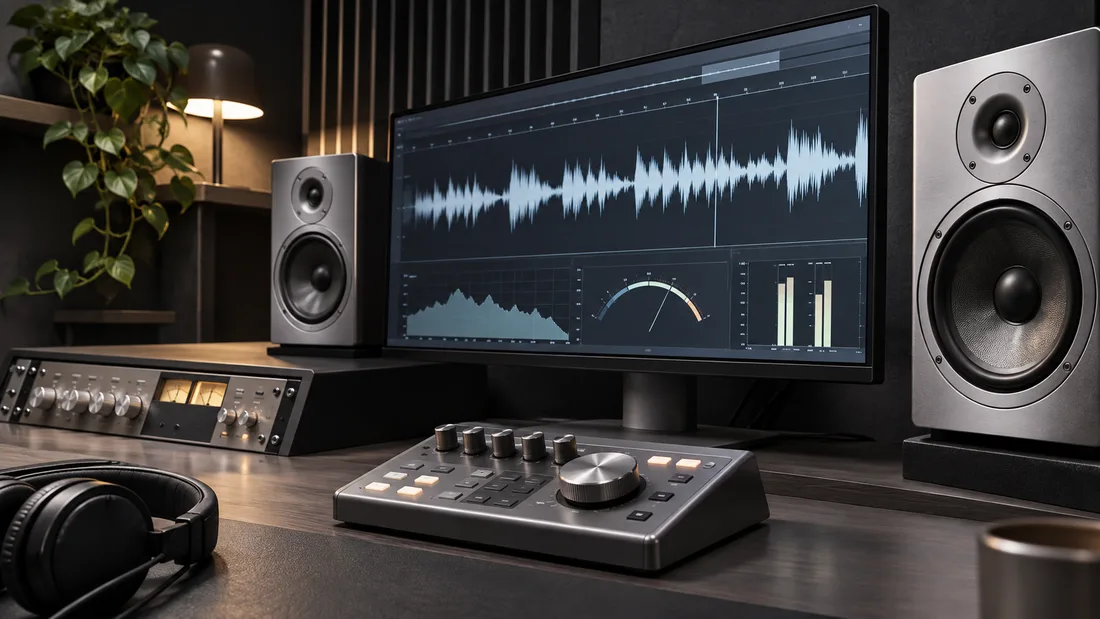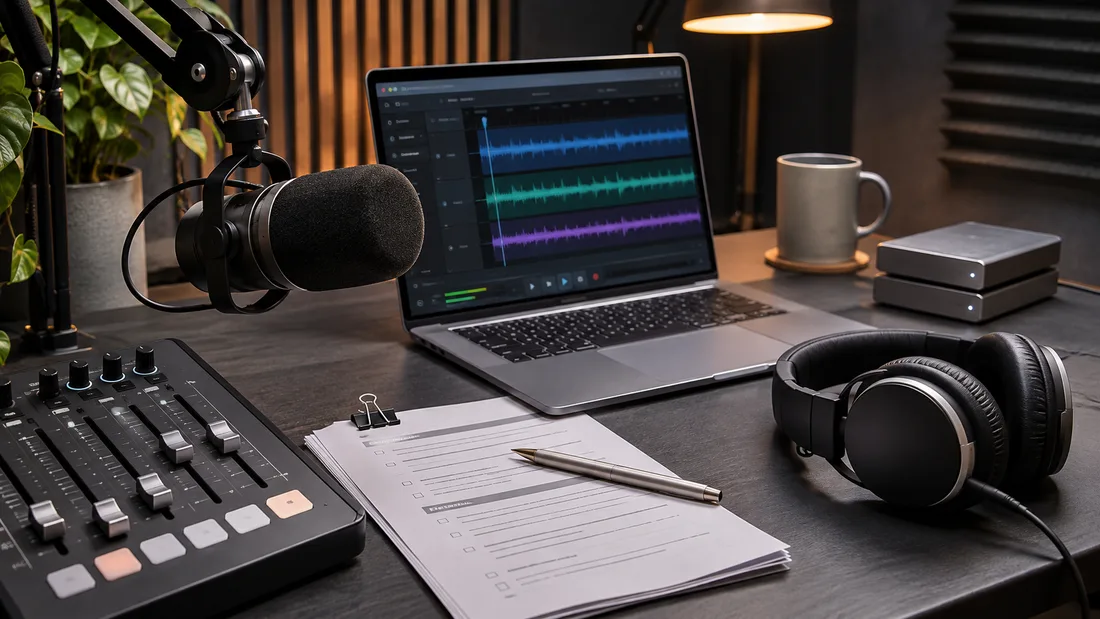
Producing the first episode of a podcast is an experiment. Producing the twentieth is largely a matter of knowing which decisions belong to every episode and which need to be made afresh. An independent producer cannot assume unlimited studio time or an assistant to find the raw files from last month's interview. A useful workflow is built around those limitations. It reduces the number of occasions on which someone has to solve the same technical problem under a new deadline.
A good production system also protects the interesting parts of the work. The host has more time to research the guest when the microphone session is already configured. The editor can concentrate on the cut when each recording is identifiable. The person responsible for publication can check the actual finished audio without wondering which of several conflicting exports is the approved one.
Give every episode a stable identifier
Choose an identifier at the moment an episode enters production, rather than when publication is imminent. A number or short unique name can survive changes in the working title and release order. Use it on the recording folders, scripts, project files and exports. Avoid using only the guest's surname; guests can return, and a single guest may participate in several segments. Retain the original recording date where that information will be useful, but do not depend on dates alone to identify a programme.
A small production might use a dedicated directory for each episode containing the recordings, project, editorial notes, mixes and deliverables. Keeping the untouched source recordings together makes it clear which files should not be overwritten. If a DAW copies imported media to a project directory, establish whether it has done so; otherwise the editor may inadvertently rely on files still stored on a removable drive. Save the working material and original files in supported locations accessible during the whole production.
Define a consistent naming convention for exports. An approved audio mixture is easier to identify by its explicit role, episode identifier and version than by a name that repeatedly acquires words such as 'final'. Version numbers allow a producer to return to an earlier approved state when an unexpected problem appears in a later revision. A published file deserves a durable record of the source sequence and master from which it was derived.
The episode brief guides technical decisions
Set down the intended audience, subject, anticipated duration, recording arrangement and delivery requirements. One programme could contain a scripted narrator, a remote interview and music excerpts, while another consists of an uninterrupted table conversation. The details influence which sources must be recorded and whether the production needs specialist arrangements, additional permissions or a separate engineer.
A short brief provides context when more than one person will touch the session. If the planned introduction depends on a quote from the interview, identify that dependency. If a guest needs a particular portion checked for a factual error, make a note of the relevant process and timing. Agree on an editorial review stage rather than making untracked changes immediately before upload. In a solo project the same brief serves as a useful reminder after several days away from the material.
Choose a realistic recording schedule. Booking a quiet room for exactly the duration of the intended discussion leaves no time to set levels, troubleshoot equipment or capture short retakes. For remote guests, consider the time zones involved and provide time for a connection and sound check. A session can become unnecessarily stressful if its logistics assume the recording will proceed flawlessly from the instant everyone arrives.
Create a session template that remains editable
Prepare a recording template containing the input assignments and tracks most often needed. Give microphones meaningful names such as Host, Guest One and Guest Two. Include separate places for reference playback, music and narration when those sources occur frequently. Set the expected sample rate and recording format, and establish a monitoring arrangement that the participants can use comfortably. Save the template separately from episode-specific sessions so changes made for one guest do not automatically alter the starting point for everyone else.
A mixing template can help as well, particularly if the same voice microphone and room are used regularly. Sensible starting points for equalization, a dialogue bus and a final loudness meter can save repetitive routing work. Processing decisions still need to follow the recorded signal. A preset compressor can behave differently when a guest speaks considerably louder than the usual presenter. Listen to the individual tracks and adjust processing rather than relying on the fact that they occupy familiar mixer channels.
Store music assets and approved recurring identifications in a location shared by projects, with appropriate information about the rights to use them. Copy the exact material into an episode's retained archive when necessary so future retrieval does not depend on a living library that may change. An update to a recurring music bed should be intentional rather than unexpectedly altering a previously completed programme.
Separate structural editing from the mix
It is tempting to start treating each segment as soon as it enters the editing timeline. On a complex episode, this creates a risk of spending time on material that will be removed entirely. Complete the principal edit first: establish the order of sections, identify missing narration, trim material that does not support the episode, and mark factual questions. Record any new explanatory elements and resolve substantial structural uncertainties before polishing the overall sound.
In the next pass, work through the transitions, room tone, intrusive noises and individual voice balance. Keep notes on any edits involving special treatment of a fragment. When someone hears the revised draft, a clear revision history helps locate the point quickly. Avoid exporting a new master for every speculative adjustment if a review version will suffice. A shared, time-referenced set of changes reduces ambiguity about which sentence or sound requires attention.
Reserve the final mix pass for the assembled programme. Music that sounds appropriate against one speaker may interfere with the intelligibility of another. Check the relative level of transitions, advertisements or credits where applicable, rather than assuming all inserts are suitable because their own waveform looks healthy. Listen in sequence. A succession of individually polished clips can still be tiring if their combined loudness and tone vary sharply.
Put a quality-control stage between export and release
Export the finished master in an archival format and create the delivery version required for publication. Verify the actual files, not simply the last timeline played in the DAW. Play the opening, closing and all programme transitions from the export. For shorter episodes a full uninterrupted listening pass is entirely realistic; longer material benefits from a scheduled pass in which issues are noted rather than constantly pausing to fix them. Check that silence and fades at the boundaries are intentional and that no temporary spoken instruction remains in the mix.
Confirm the duration, expected channel count and delivery encoding. Check integrated loudness and true-peak behaviour in the context of the selected distribution requirements, especially after creating a lossy version. Review the title and description for accuracy. Names, spellings and any numerical claims should be checked against the editorial source. Playback metadata can be additional to the hosting record; identify which fields the chosen delivery system actually uses.
After publication, verify that the correct media is served and that the episode information accompanies it. If a replacement is necessary, document the revised publication file and avoid leaving an unexplained change between the source archive and the current version. Some listening platforms cache episodes, so the mere existence of a new file at the host does not guarantee that every listener will receive it immediately.
Maintain an archive that can survive changed equipment
Keep the original interview recordings and approved lossless mix. A future editor might need to excerpt a previous conversation after the original service or recording application is no longer available. A standard audio file can be useful even when proprietary processing settings cannot be reopened. For projects that depend on unusual plug-ins, consider preserving processed stems and other renderings that will reproduce important elements of the sound.
Maintain more than one copy of valuable recording material, with an independent backup in a suitable separate location. Follow the production's arrangements for sensitive or private interview content. A cloud synchronization service and a backup are not necessarily the same thing; deletion or corruption can be synchronized as efficiently as useful changes. Periodically verify that files can actually be retrieved. A workflow is successful when the producer can find the right episode, identify its approved audio and begin the next recording with confidence instead of rebuilding the production process from scratch.