Many compelling interview programmes sound as though the host and guest have happened upon an interesting conversation together. That effect is rarely achieved by arriving unprepared. The host needs enough background knowledge to recognize a revealing answer and enough flexibility to abandon a planned question when the guest takes the discussion somewhere more interesting. The production team, meanwhile, needs to anticipate the technical circumstances without making the guest feel as though they have entered a test laboratory.
An interview plan is useful to the extent that it frees the host's attention. It cannot substitute for listening. A printed list of twenty questions may provide reassurance, but it becomes an obstacle if all twenty have to be asked regardless of how much the guest has already explained. The aim is to create a structure that will remain intelligible when edited and that leaves room for the unexpected detail.
Define the promise made to the listener
Before researching the guest, describe the prospective episode in one or two straightforward sentences. Which part of the guest's story matters to someone who has not met them? A producer interviewing a recording engineer about a new studio might choose to focus on the design decisions that changed the engineer's working habits. An interview centred on the same studio could instead explore the local community of musicians. These are different episodes, even if the biography and location are identical.
Research is more productive when this focus is established. Check the spelling and pronunciation of names, identify the main events in the guest's working history, and make a note of any terminology a general listener may need explained. Read or hear earlier public interviews, where available, partly to avoid making the guest repeat their best-known anecdote word for word. Important claims deserve verification. Asking for a concrete account of an event often yields something more useful than reading a summary of the guest's career aloud and asking whether it is correct.
Communicate the central subject to the guest in advance, including the duration you expect the session to take and whether it will be edited. Ask about sensitive details that may require care or context. This conversation is not a promise to let someone control every editorial choice, but clear expectations are valuable. If someone is inexperienced with microphones, a brief explanation of the format and the intended audience may be much more helpful than sending a long technical instruction sheet.
Prepare questions in groups, not a rigid sequence
It is useful to keep a small number of topics visible throughout the interview. These might be the decision that led to a project, what took place during it, the difficulties encountered, and what the guest learned. Within each area, prepare an opening question and several possible follow-ups. The follow-ups need not all be used. They exist to help the host find an avenue into the subject when the first response is unexpectedly brief.
A question that requires several facts to be confirmed at once encourages the guest to answer the easiest part and forget the rest. Shorter questions offer better openings. Instead of asking how the guest selected the studio location, negotiated the rent and decided on a recording console, begin with the story of how the room was found. The subsequent questions can then follow whatever happened next. This is also easier to edit because the answers tend to resolve one issue at a time.
Do not assume that every open question is automatically useful. A broad request such as asking an engineer to describe their entire career can produce a long résumé rather than a scene. Asking them to recall the first recording session in the room is likely to produce a specific memory. The host can then ask who was there, what went wrong, or what they noticed in the sound. Concrete questions encourage examples that give the audience a sense of place and character.
How listening changes the next question
Experienced hosts pay attention to words that signal an omission. A guest may describe a particular project as successful while mentioning, almost in passing, that they had to start again. That small detail opens a possible line of inquiry. What caused the restart? Who made the decision? Was the resulting recording fundamentally different? An answer that reveals the work behind an achievement usually proves more interesting than another recitation of its outcome.
Pause before moving to the next question. Silence on a recording can feel longer to a nervous host than it does to the guest. The latter may be collecting their thoughts or deciding whether to explain something further. A short pause gives the guest that chance and provides convenient editing space. Constantly supplying affirmative sounds can make a guest more comfortable, but the sounds also become embedded in the recording when they overlap speech. A nod can convey the same encouragement during an in-person interview.
Clarification is another important part of active listening. When a guest uses a technical term, first decide whether the intended audience will understand it. An expert programme might expect its listeners to recognize a particular type of processing. A general interview might need a quick example of what the guest hears when that process is applied. This need not sound like a lesson. Asking what changed in the resulting recording can explain the concept naturally.
Give the recording environment the same attention
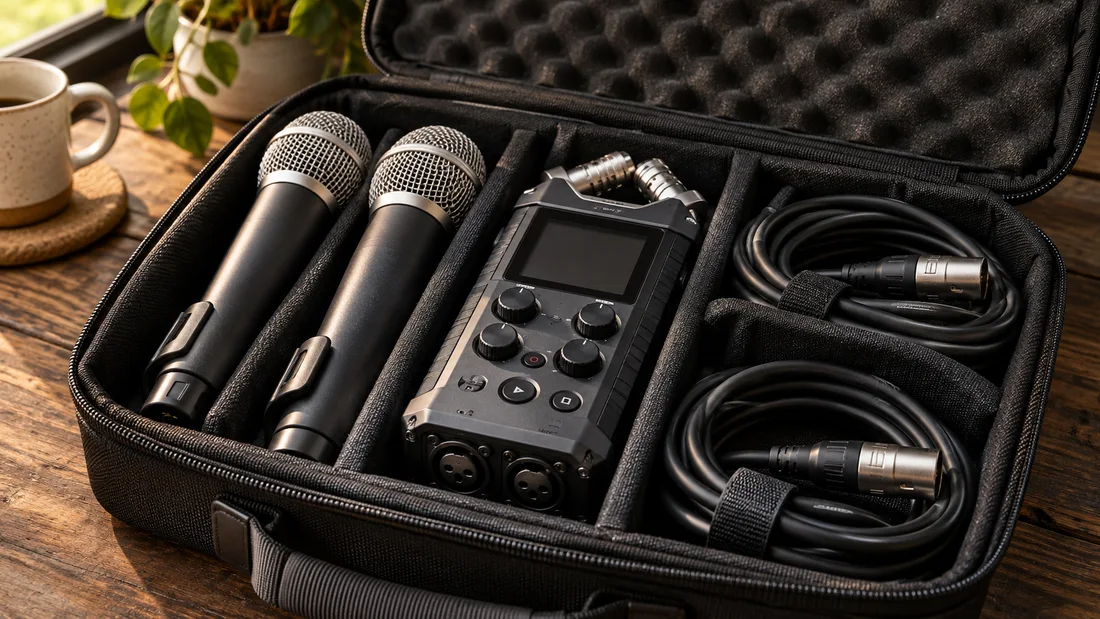
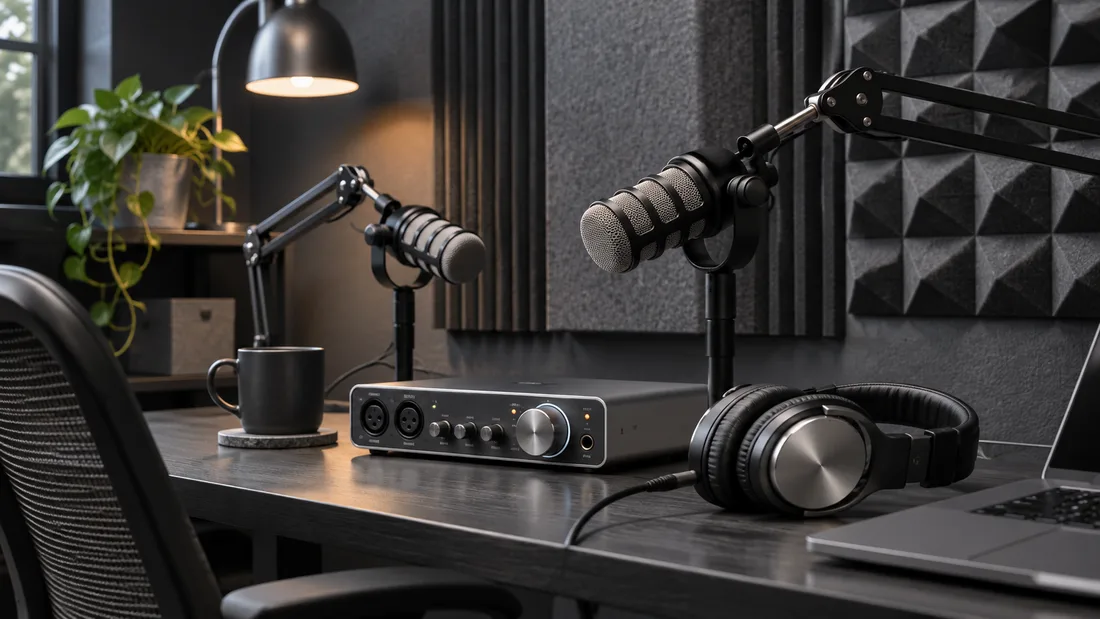
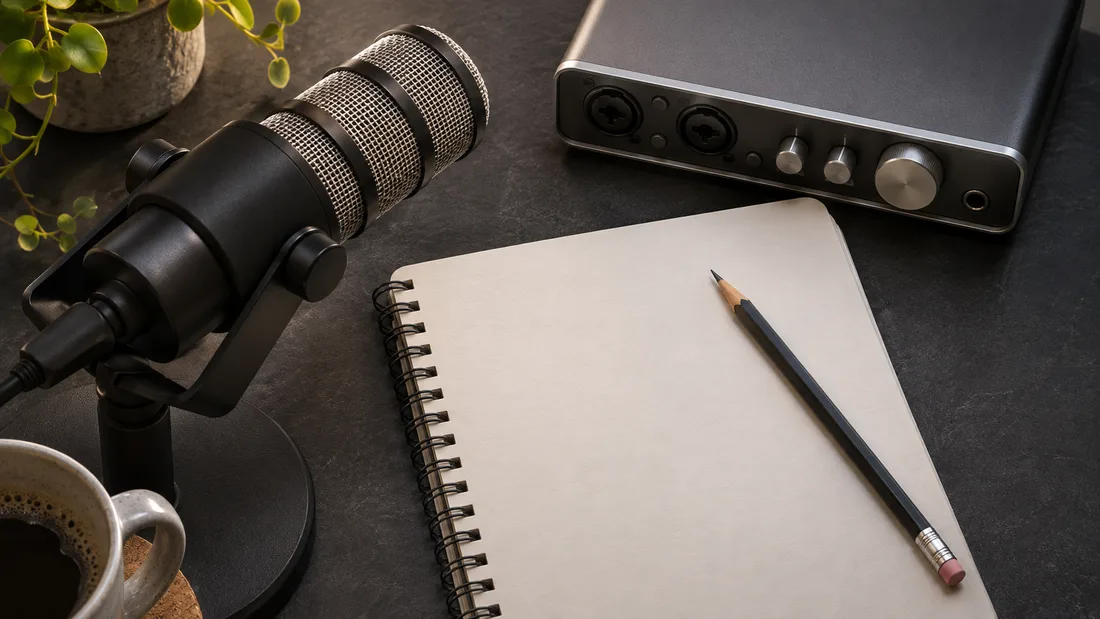
Determine who will operate the equipment. A host who also has to check battery life, locate a missing file, and continually set levels may struggle to remain attentive. In a small independent programme, the host may not have the option of a separate engineer. This makes a tested setup especially valuable. Use a known recording arrangement, label tracks in advance, monitor through headphones, and give each person adequate microphone coverage. Do the equipment check before beginning the actual introductory question.
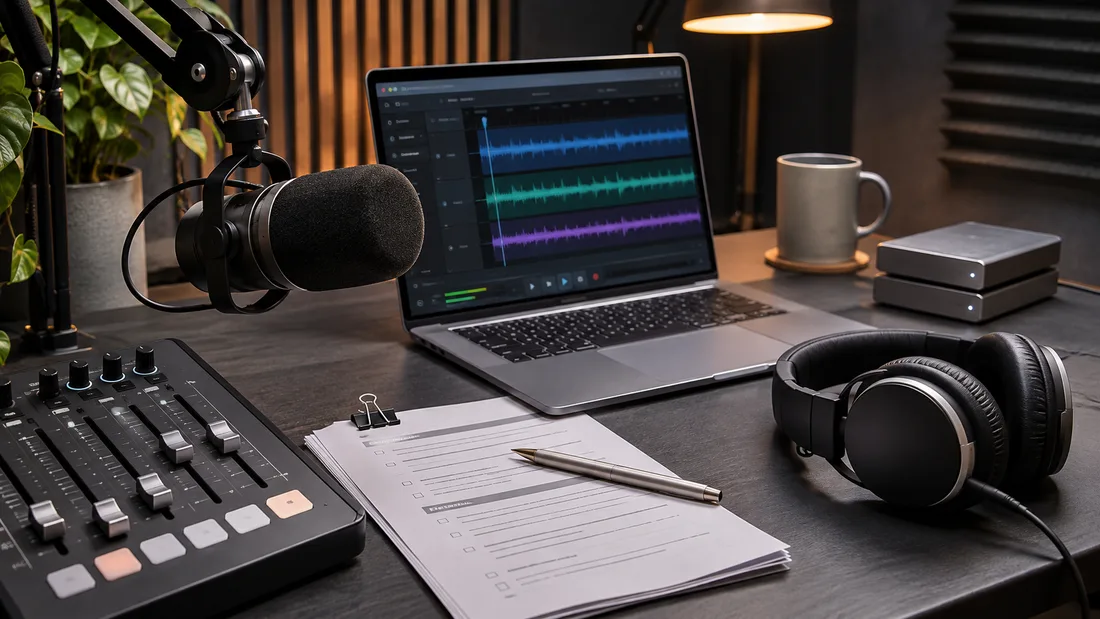
Place the host's notes where they can be read without turning away from the microphone. Paper handling near a sensitive capsule will be heard on the recording, so use one sheet or a stationary display where possible. If the guest is referring to a physical document, find a place for it that does not cause the microphone to pick up constant page turns. Maintain enough eye contact to keep the conversation relaxed. In a remote interview, similar considerations apply to the location and size of the video window.
If illustrations or recorded excerpts are part of the discussion, identify their place in the plan. The guest may refer to a passage that the listener has not yet heard. A brief explanation during the recording can help the editor connect the conversation to the clip. Obtain the appropriate permissions for any material to be included. When the guest will hear an extract through headphones, decide how it will be delivered and monitored before the interview rather than introducing a new signal path halfway through.
Creating a beginning and ending that work in audio
There is no requirement for the conversation recorded first to be the first thing heard by the audience. A host can learn what the real story is during the interview and write a more representative spoken introduction afterwards. In the recording itself, an opening exchange on a familiar subject is often useful to settle the guest into their seat and establish the pace. It may be left out of the final episode if it does not add information.
A closing question can invite the guest to reconsider the subject in the light of everything discussed. Avoid mechanically asking for three pieces of advice if there is a more natural way to end the episode. Sometimes a specific unresolved detail makes a good final topic. If necessary, confirm the spelling of a name or clarify a date after the main conversation, keeping the microphone running with the guest's knowledge. It is easier to catch these small items while the person is still available than to fill the gaps later.
Take useful notes for the editor
Write brief references to moments worth revisiting while the interview is still fresh. Record times or chapter names, not a transcript of every answer. Note any factual statement that needs checking, an interruption that must be removed, or a place where an inserted example would help. If a guest corrects their previous statement, identify which version is accurate. The responsibility continues into the edit: do not arrange fragments in a way that changes the speaker's intended meaning merely because the resulting sentence sounds smoother.
A good interview plan is deliberately incomplete. Preparation provides clear material and a direction, but the guest supplies details that could never have been predicted. Sound production has succeeded when the recording preserves that exchange with enough clarity and flexibility that the listener can simply follow the conversation.