The familiar two-channel system consists of a source, amplifier and a pair of speakers connected by speaker cable. Many newer stereo speakers dispense with the external power amplifier and accept a signal from a television, computer or network source directly. Calling these products active speakers is conventional, but not every powered speaker is active in the specific engineering sense. The distinction helps explain why moving the amplifier into the cabinet can influence more than the amount of wiring visible behind the furniture.
Three arrangements that can look similar
A conventional passive multiway loudspeaker contains drivers designed for different parts of the frequency range. Its crossover uses passive electrical components to distribute the signal from a power amplifier. The crossover, driver impedances and cabinet all interact to determine the acoustic response. The amplifier must supply a suitable voltage and sufficient current to the resulting electrical load.
In a genuinely active multiway system, the signal division occurs before power amplification. A separate amplifier channel drives each frequency-specific driver or group of drivers. The separation may be implemented with analogue active circuitry or digital signal processing. The crossover then works with relatively low-level signals, and the power amplifiers are connected to more predictable loads than a complete passive crossover network would present.
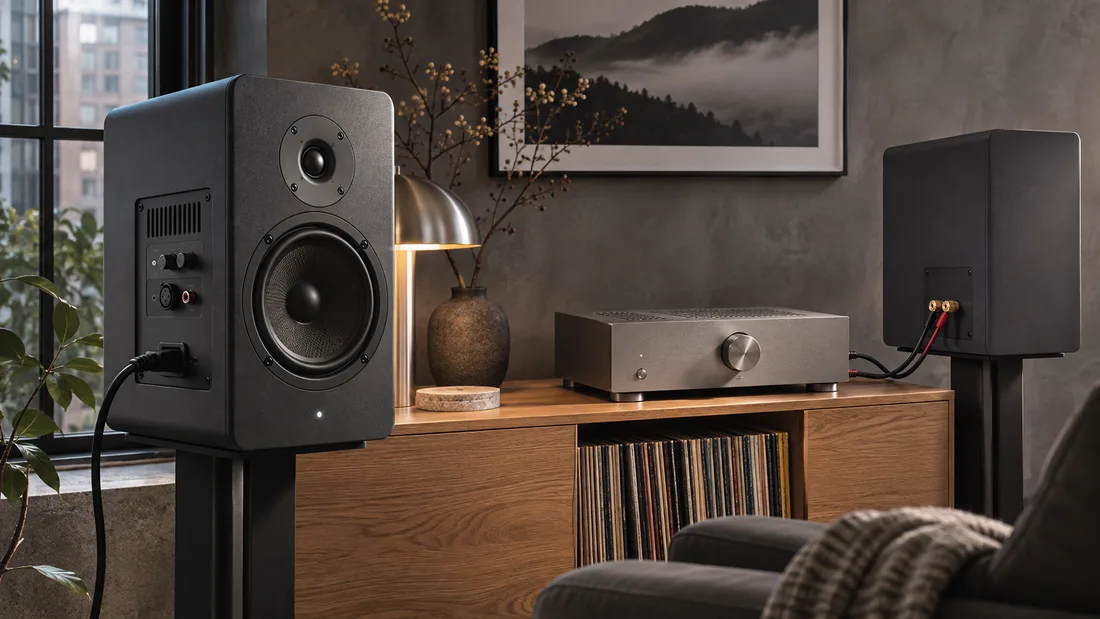
There is also a common intermediate arrangement: a powered pair that contains a stereo amplifier in one cabinet, but still uses passive crossover networks in each speaker. An ordinary speaker cable connects the electrically passive satellite cabinet. That design offers some of the convenience of self-amplification without necessarily offering independent electronic control of every driver. Read the technical description before assuming from a mains inlet that the whole system is actively crossed over.
Integration can solve particular engineering problems
The active speaker specialist makes the cabinet, drivers, crossover and amplifier choices together. Separate amplifier channels can be selected for the different voltage and current demands of the bass and treble systems. Digital processing can apply frequency shaping, delay and suitable protection, tailored to the physical behaviour of the drivers. This opens opportunities that would be difficult to achieve with a conventional passive filter alone.
That freedom comes with constraints. A small active speaker with generous low-frequency equalisation still has finite cone excursion, amplifier power and heat dissipation. A protection limiter may reduce its available bass level as the volume rises. A specification displaying impressive extension at one measurement level does not establish that the speaker will maintain that response at the loudness required in a large space.
A well-designed passive system may likewise achieve excellent directivity and frequency response without digital processing. Designing its crossover requires careful work with real driver behaviour and impedance. A good passive speaker does not become inadequate merely because another design can implement complicated filters electronically. Architecture provides the designer with a toolbox; the acoustic result is what the listener receives.
An amplifier choice with passive speakers
Passive speakers offer the opportunity to choose an amplifier with the particular functionality, controls and headroom required for the system. A simple two-channel integrated amplifier may take several line inputs, provide phono gain and include a headphone socket. A modern streaming amplifier may integrate digital inputs and room correction. Either can remain in use if the speakers are subsequently changed.
Speaker sensitivity, the listening distance and the desired output determine how much clean power is useful. Nominal impedance does not fully describe the difficulty of a loudspeaker load. Its lowest impedance, phase angle and behaviour over frequency matter when evaluating the demands on the amplifier. A modest amplifier may have abundant headroom for efficient speakers used at a moderate level, while a larger room and comparatively insensitive speakers can expose its limits.
Use the manufacturer's intended connections and avoid attaching several speakers to a single output without checking permissible combined impedance. Most two-channel passive systems work simply and reliably with ordinary appropriately sized speaker cables. Specialised cables or expensive connectors cannot compensate for an amplifier being unsuitable for the load or for speaker locations that cause a poor stereo image.
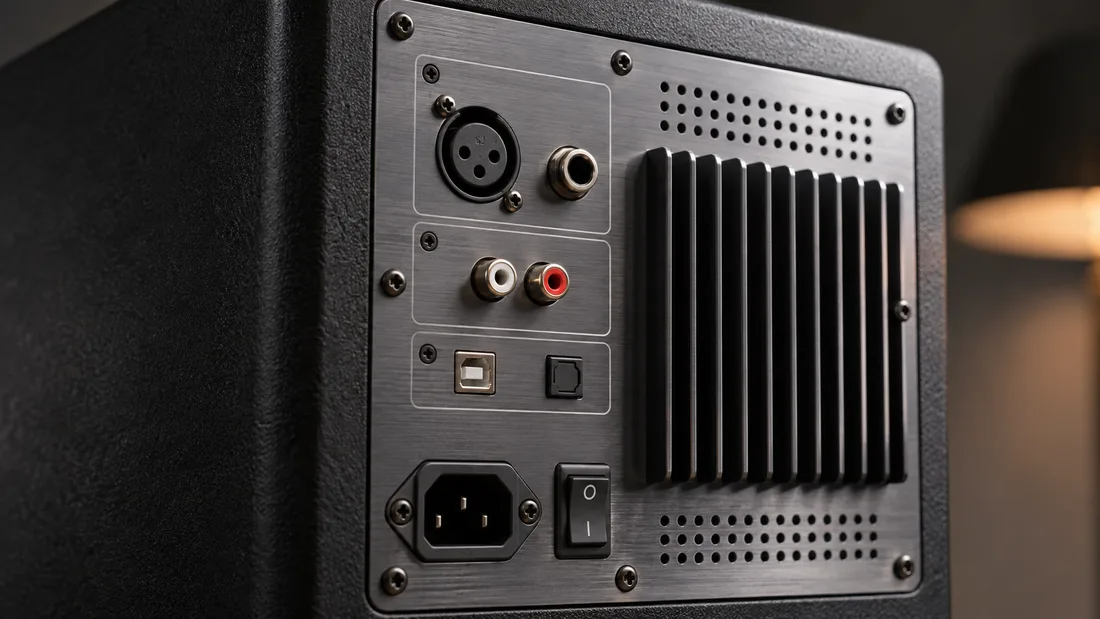
Powered systems change the installation plan
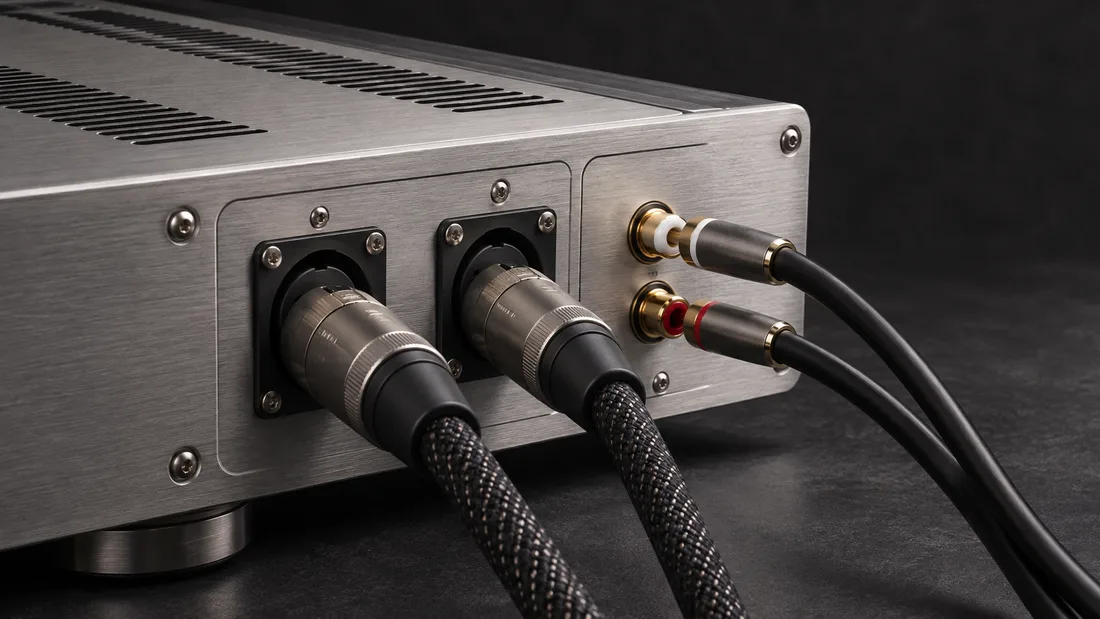
A true active pair requires power at both cabinets unless power and audio are distributed through a purpose-designed interconnection. Two balanced analogue cables might carry independent channels from an audio interface to active studio monitors. Consumer systems may provide one main speaker with TV, USB and network inputs, with the second receiving a digital or analogue feed through a dedicated connection.
Check the proposed locations for mains sockets, cable routes and ventilation. A wireless stereo connection does not generally make the other cabinet electrically independent of a power socket. A radio connection may also have placement, interference and software constraints that a conventional loudspeaker cable avoids.
Volume control requires particular attention. Some active monitors are intended to receive an analogue signal whose level is controlled by an external interface or monitor controller. The controls on the back are for installation and level matching, not for listening adjustments across the room. A powered speaker designed for domestic use may instead have remote control, input selection and automatic standby. Choose an arrangement that genuinely works for daily operation rather than assuming compatibility from the existence of an input socket.
Evaluate the complete digital path
Active speakers with digital signal processing may convert analogue inputs to digital form, apply crossover and correction, and then convert the driver feeds back into analogue for the amplifiers. The additional conversion is not a defect if competently implemented within the required noise and distortion limits. It does mean that somebody hoping to retain a completely analogue signal path when listening to records needs to examine the actual architecture rather than the connector type.
With a digital input, compatible active speakers may handle much of the playback chain internally. A suitable network or HDMI audio connection can simplify everyday use with a television. Before buying, verify whether a particular input accepts the sample formats supplied by the source, and whether it controls speaker volume in the expected way. Some systems support convenient television volume changes while others need independent controls.
Latency is worth considering for video or instrument monitoring. A purely domestic music system can usually tolerate a little buffering, because there is no independent visual event with which the sound must remain synchronised. An electronic keyboard or recording interface presents a different requirement. Active loudspeakers designed for monitoring may offer a short signal path that differs materially from a network music speaker's behaviour.
Ownership over several years
Detachable passive loudspeakers have an admirable simplicity. A fault in the amplifier does not normally take the speakers out of service, and a replacement source can connect without requiring new control software. The crossover and drivers can generally be serviced as independent assemblies, subject to parts availability. This modularity appeals to listeners who envisage retaining their speakers for a long time.
An active design adds electronics and sometimes software whose repair or support must be considered. Investigate the warranty, availability of service and the ability to use a standard input without depending on a proprietary online application. An active speaker with a conventional analogue connection may remain useful if a network feature is eventually discontinued. Some wireless systems cannot be set up or restored without a particular control interface.
Conversely, an integrated active pair can be an economical complete system. The user avoids purchasing and matching separate amplifiers, converters and cables. The right question is not whether one cabinet contains more failure points, but whether there is an acceptable route to repair or continued use of the remaining functions.
Make a comparison at the intended distance
Compare the cost of complete systems, including any required source, stands, controllers and cabling. Listen at a distance resembling the proposed installation and at several sensible levels. Establish whether the bass response and stereo image remain satisfactory without the protection circuitry becoming intrusive or the passive amplifier being pushed to distortion. Check input changes, standby recovery and the available volume controls. The most appropriate architecture is the one whose acoustic performance and operating requirements can be sustained in the room, rather than the one with a more fashionable method of distributing signal power.