When dialogue has to be recorded outside a controlled studio, the engineer loses some of the available choices. The performers may walk, the camera may establish a restricted frame, and the location may contain mechanical noise that cannot be stopped. A long directional microphone can help in such situations, yet it is frequently described in a way that encourages unrealistic expectations. A shotgun microphone is not the acoustic equivalent of a telephoto lens. It is one component in a system whose success depends heavily on distance, direction, ambient conditions and the skill of the person holding it.
How the interference tube works
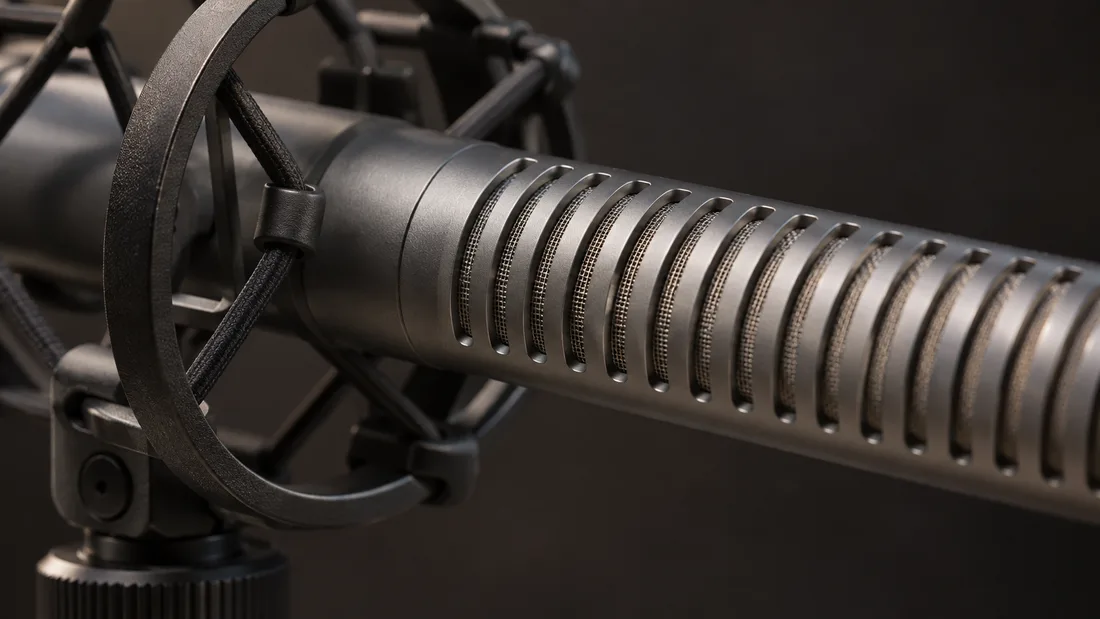
The long slotted tube at the front of a conventional shotgun microphone supplies an acoustical path to a directional microphone capsule. Sounds arriving on its principal axis travel along the tube to the capsule. Sounds arriving from the side enter through several openings and have different path lengths. At suitable frequencies, the contributions interfere partly destructively when they reach the capsule, reducing the response to lateral sound. In effect the tube provides an additional form of directionality, rather than electrically amplifying distant voices independently of their surroundings.
Because wavelengths vary with frequency, an interference tube's behavior also varies. Low frequencies have wavelengths much longer than the characteristic dimensions of many practical tubes, so their directionality relies heavily on the capsule's underlying pattern. Shorter wavelengths produce different interference behavior, and irregular lobes may appear at some frequencies and angles. A long microphone can have a particularly focused response in much of the mid and upper frequency range without providing uniform rejection at every angle. Read the actual polar charts if the source has to be separated from a particular background sound.
Distance remains the deciding factor
For a compact source in open space, doubling the distance to it reduces the direct sound pressure level by approximately six decibels under free-field conditions. Background sounds originating over a large area need not diminish in the same manner when the microphone moves away from a person. A dialogue recording made with a long microphone next to the camera may therefore contain considerably more environmental sound than recording with a shorter microphone held just above the frame. Choosing a more directional capsule cannot fully compensate for the lost wanted sound.
When working with a camera operator, determine the upper and lower frame boundaries and agree on a safe working position for a boom. Wide shots restrict this placement more than close shots. The microphone can potentially be moved closer during close coverage, which creates a better direct-to-background ratio. If editing between shots will expose an obvious change in ambient sound, consider recording separately available microphones, preserving room tone and evaluating the required continuity before leaving the location.
Performers do not remain static
A boom operator tracks a moving speaker by aiming the microphone toward a region containing useful voice radiation. Simply pointing in the general direction of a group can produce inconsistent speech levels and tone. If several people speak in quick succession, knowing the dialogue enables anticipatory movement. The microphone should move smoothly enough that handling noise and variable reflected sound do not dominate the recording. A comfortable stance, appropriately adjusted boom length and clear communication with the camera operator are essential working conditions, not incidental accessories.
For a conversation seated at a table, it can be practical to move the microphone between the speakers or to use more than one microphone. Separate lavalier and boom recordings provide alternatives for the edit, but should be monitored independently for clipping, clothing noise and interference. Mixing two microphones aimed at the same person live may create time-of-arrival problems. Keep isolated tracks if the recording equipment allows them and choose the best perspective for a particular passage afterward.
Indoor locations and reflected sound
Small rooms with hard surfaces present a particular challenge for interference-tube microphones. A reflection of the speaker's voice can arrive at an angle different from the direct voice, receiving a frequency-dependent response from the tube. The combined sound may not be as natural as a microphone with less complicated off-axis behavior placed at a similar distance. A compact hypercardioid or supercardioid studio microphone intended for dialogue work is often worth considering in reflective interiors, even though a longer shotgun appears more directional in specifications.
It makes sense to test potential locations before the scheduled interview when possible. Speak a short passage, then listen to it through headphones rather than assuming that a directional device will cure the audible reflections. Try turning off a nearby ventilation system with the location owner's permission. Open curtains or move the recording position away from a bare reflective wall where practical. In an uncontrollable sound environment, focus on intelligibility and repeatable character across takes instead of aiming for an impossible completely isolated recording.
Wind protection has different levels
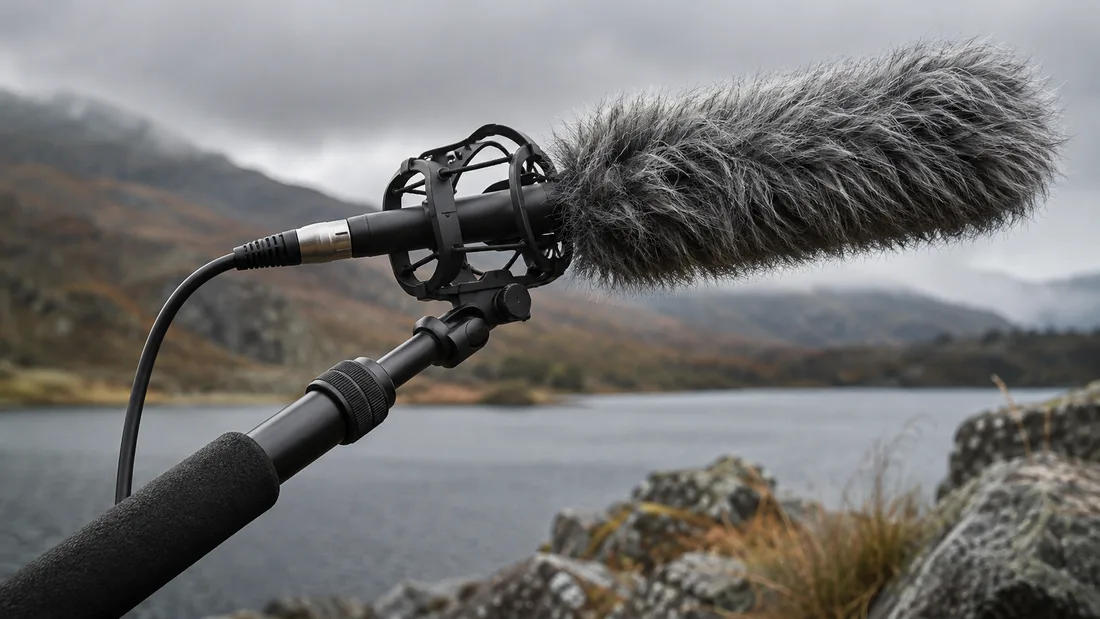
A foam screen can reduce mild air movement and protect the microphone from certain small bursts, but sustained outdoor wind often demands a different arrangement. A basket windshield surrounds the microphone with a relatively still enclosed region of air, and a suitable furry outer cover can further moderate airflow. Fit components intended for the microphone's dimensions and leave clearance around the interference tube openings. Incorrectly installed protection may contact the microphone, restrict performance or generate mechanical noise as it moves.
The wind can vary quickly over time and between exposed and sheltered positions. Monitor during a test rather than waiting for a gust to ruin a crucial interview answer. A strong low-frequency rumble caused by wind is not comparable to ordinary acoustic bass in the scene. It can overload the microphone or recording stage before later filtering takes place. An appropriate high-pass filter can help manage residual low-frequency noise, but physical protection and sensible placement address the cause. Consider changing the orientation of the scene relative to wind direction when that is compatible with the production.
Reliable recording equipment and levels
Ensure that the microphone receives the specified power. Depending on the model, it may require phantom power from the recorder, an internal battery or another compatible supply. A recorder should have appropriate input gain and room for unpredictable speech peaks. When handling a location recording, restrained gain is a practical advantage: isolated tracks captured with headroom can be brought into the correct balance later. Some portable devices support formats and converter arrangements designed to provide an extended usable recording range, but no recording format alone can undo overload in a microphone's own internal electronics.
Use headphones capable of revealing handling noise and background events. Take note of unexpected sirens, passing aircraft or short interruptions, and ask for another take when needed. Record an appropriate period of uninterrupted location ambience at each significant setup. This material may be highly useful to an editor attempting to smooth transitions in dialogue without creating conspicuous gaps. Keep records of usable takes and microphone assignments so those recordings can be found efficiently.
Decide what the recording is meant to convey
Direct speech recorded for a documentary typically needs to remain understandable. A wildlife or ambience recording may instead depend on a meaningful representation of the surrounding scene. A single shotgun microphone directed at a distant sound does not provide a broad stereo field, even if the recording is copied into two channels. A dedicated stereo array or a separate ambient pair offers different spatial information. Choose the system that captures the required relationship between individual events and their environment. The shotgun is especially valuable where a restricted direction of pickup and physical working distance serve the production, provided its practical limits are understood before the recording begins.