Delay is one of the few effects that can introduce a recognizable musical event without requiring another performed note. Unlike a dense reverb, a delay can repeat an individual consonant, drum hit or guitar tone distinctly enough to become a rhythmic part of the composition. It also serves a less obvious function in production: very short delays alter the perceived size, distance and localization of a sound. Those applications share the same basic mechanism but demand considerably different listening strategies.
Translate a duration into a musical value
Tempo-synchronized effects are popular because rhythmic repeats often remain intelligible when they coincide with the subdivisions already present in a song. A quarter note at 120 beats per minute lasts 500 milliseconds, calculated by dividing 60,000 by the tempo. An eighth note at the same pace lasts 250 milliseconds, and a dotted eighth note lasts 375 milliseconds. The processor may calculate those values automatically when synchronized to the host's tempo. That convenience is particularly useful when working with a project containing tempo changes.
Synchronization matters only if the repeat has a useful relationship to the source and the arrangement. Play a simple instrumental figure through several subdivisions. A delay that lands on already crowded beats may be difficult to hear or may emphasize the wrong notes. A repeat that fills the gaps between accents can transform a sparse line without making its original rhythm more complicated. Try temporarily playing only one note at a time and listening to the rhythmic pattern created by the echoes. That exercise exposes the contribution of the delay more clearly than a densely played phrase.
Choose feedback according to the shape of the passage
Feedback routes a portion of the delay's output back into its input, allowing an echo to create subsequent echoes. With a stable feedback loop below unity gain, those later repeats generally recede. The practical relationship between a percentage control and the number of audible repetitions varies with signal level and internal processing. Filters, distortion and modulation inside the feedback path can also change each successive repeat. The first echo might be recognizable as a vocal phrase, with subsequent echoes becoming progressively darker or more irregular.
High feedback settings can produce a persistent pattern that outlasts the original sound. Some devices allow feedback at or above the point where their loops can sustain or increase their own level. Exercise care with loud monitoring when experimenting with those settings. In a mix, a sustained effect must have enough spectral and rhythmic space to remain musically useful. Lower the feedback during passages with substantial harmonic movement; otherwise a note from one chord may remain audible when the next chord arrives. A little sustained feedback at the very end of a phrase often has more impact than long echoes applied continuously.
Give recurring echoes their own tonal balance
In a physical setting, reflected sounds frequently differ in frequency content from direct sound. Some types of early delay equipment also produce progressively colored repeats because the signal passes through the same limited-bandwidth circuitry or recording medium multiple times. Digital delays make a wide range of responses possible, from nearly identical reproductions to deliberately filtered effects. A high-frequency reduction can help the original consonants remain in front of the repeats, while reducing the low end can stop echoed bass notes from occupying too much of the arrangement's foundation.
Where the filtering occurs is significant. An equalizer placed after the delay applies its curve to every repeat equally. A filter within the feedback loop can change the tone further on every trip around that loop, allowing later echoes to become increasingly different from the original. Compare these responses using a short recording with obvious transients and harmonics. You may prefer a comparatively clear first repeat followed by darker subsequent echoes, particularly when the effect is readily audible between important phrases.
Short delays create size without distinct rhythms
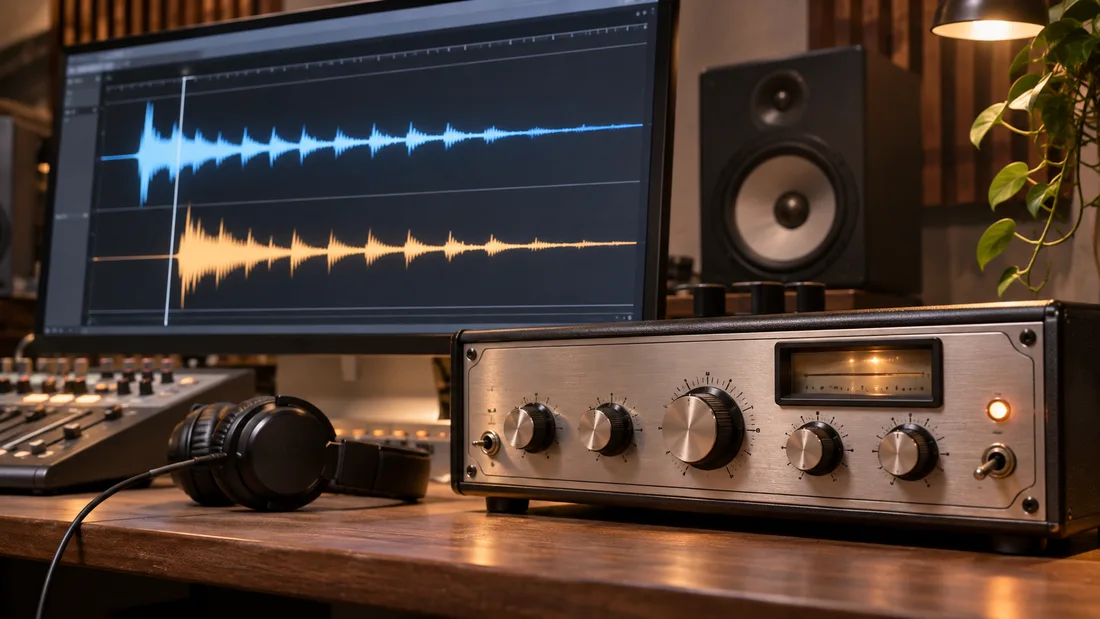
As delays become sufficiently short, the listener no longer necessarily perceives the delayed signal as a separate event. A dry sound mixed with a slightly delayed version can produce changes in timbre through constructive and destructive interference. The resulting comb-filter response depends on the delay duration and relative signal levels. A very short delay is therefore not simply a transparent method of creating width. It can be attractive in one arrangement and unusually hollow in another.
A common stereo technique distributes different delay times or delayed and direct signals between left and right channels. On headphones the apparent separation can be impressive, but summing those channels may expose significant cancellations. Check mono compatibility and investigate whether the apparent center of the instrument has shifted. If the mix needs the sound to remain strongly localized, a narrow stereo effect or two separately performed parts may be a better choice. Natural doubling introduces variations in pitch, timing, dynamics and articulation that a simple delayed copy cannot reproduce.
A slapback echo places the recording close to the listener
The recognizable character of a single short echo is a useful alternative to a long tonal reverb. The repeat may resemble a reflection from a nearby surface or take on a distinctive vintage musical quality. With little or no feedback, there is ample room to adjust its level against a dry foreground signal. A vocal can gain body while retaining its recognizable location, and a guitar line can acquire a sense of enclosure without the diffusion associated with a dense reverberant tail.
Adjust the echo length by listening for unwanted doubling of particular syllables or notes. The exact point where the echo becomes rhythmic depends partly on the source's attack and the arrangement. Distorted instruments, for example, may carry energy for considerably longer than a sharply damped acoustic sound. On a vocal recording, pay particular attention to word endings. If the effect makes the listener hear words twice, reduce its level, filter it or shorten the timing. A deliberate foreground slap can be quite pronounced, but an effect intended to communicate intimacy should not interfere with the performance.
Automate sends for selected words and instrumental accents
Delay becomes a different compositional tool when it receives only selected parts of the source. Rather than placing the effect permanently on a lead vocal, route it through an auxiliary channel and automate the send. An exposed final word can generate a repeated pattern while the preceding material remains relatively dry. Similarly, a brief guitar accent can begin a series of echoes that continue after its direct recording has ended. Automation of the input send allows the echoes already in the processor to recede according to its feedback setting.
Consider automation of the return level when a more abrupt fade or cutoff is intended. If the return is muted, previous repeats become inaudible even when feedback remains active internally. Some processors retain state after receiving no new signal, so later unmuting can expose older echoes. Listen to transitions rather than inspecting only automation points. Creative feedback changes are useful too: a solitary echo can blossom into a texture if the loop gain increases after a particularly effective note. These deliberate changes give the effect a role in the progression of the music.
Combine delay and reverberation with a clear purpose
A filtered rhythmic delay can maintain greater definition than a reverb of comparable audible duration. At the same time, highly distinct echoes may become distracting when the listener wants a believable space. Sending some of the echo into a shorter reverberation softens its edges and separates later repeats from the direct recording. Conversely, placing delay after a reverb can produce repeated fragments of its diffuse response. The effect order should correspond to the particular texture the arrangement needs.
Observe the cumulative energy introduced by multiple effects. A loud dry signal, several echoes and a reverberant tail all contribute to the mix even if each return seems modest on its own. Mute individual paths to determine which parts of the texture are important. Often a single, well-timed echo and a relatively modest ambience provide enough spaciousness. The apparent complexity of a delay effect is less important than the rhythm and spectral distribution it creates. When the listener has room to notice a repeat, the spaces around it become part of the musical phrase. That is where a simple delay line becomes a highly expressive production instrument.